
In the heart of Nepal, amid the bustling streets of Kathmandu, a remarkable and ancient tradition takes place every year that captivates both locals and visitors alike. This is the Indra Jatra, a vibrant festival celebrated in honor of Indra, the god of rain and king of heaven. Spanning eight days, Indra Jatra is a vivid tapestry of religious rituals, cultural performances, and communal festivities, making it one of the most anticipated events in the Nepalese calendar.
The origins of Indra Jatra date back to the 10th century, blending Hindu and Buddhist traditions in a unique cultural expression. The festival marks the end of the monsoon season and the beginning of the harvest, a time of gratitude for the rains and a celebration of abundance. It is also a period to honor the deceased, with special ceremonies dedicated to the departed souls.
As the festival begins, Kathmandu’s Durbar Square, a UNESCO World Heritage site, becomes the epicenter of activity. The square is adorned with colorful flags, lights, and intricate decorations that create a festive atmosphere. The scent of incense and the sounds of traditional music fill the air, heightening the sense of anticipation.
Central to Indra Jatra is the erection of the Yosin or Indra’s pole, a ceremonial wooden pole that symbolizes Indra’s presence. The pole, often sourced from a single tree, is selected, transported, and erected with great care and ritualistic precision. This event, known as “Yosin Thane,” is a spectacle in itself, drawing large crowds who gather to witness the pole being hoisted into place amidst chanting and music.
One of the most visually striking aspects of Indra Jatra is the procession of the Kumari, the living goddess. The Kumari, a young prepubescent girl believed to be the incarnation of the goddess Taleju, is carried through the streets in a lavish chariot. Her presence is considered highly auspicious, and people flock to catch a glimpse of her serene, painted face. The Kumari’s chariot is accompanied by dancers, musicians, and masked performers, creating a vibrant and dynamic procession that winds its way through the old city.
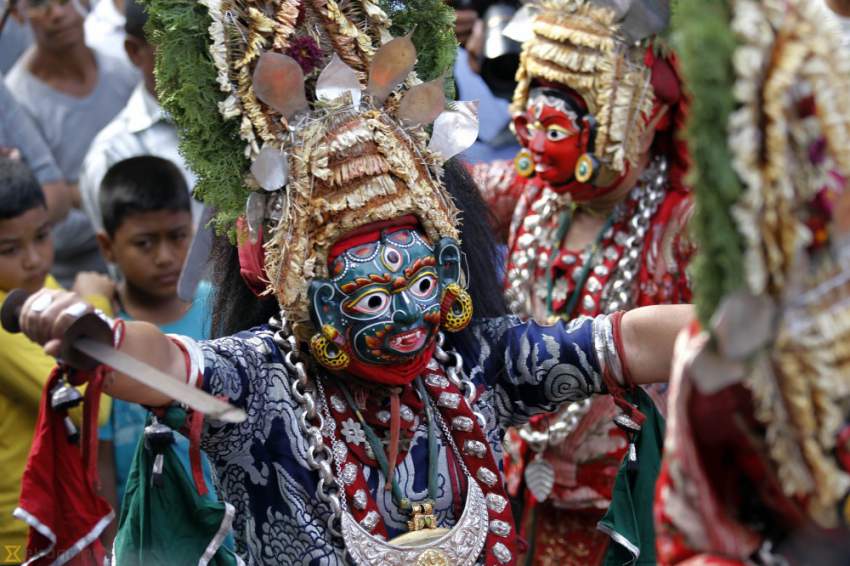
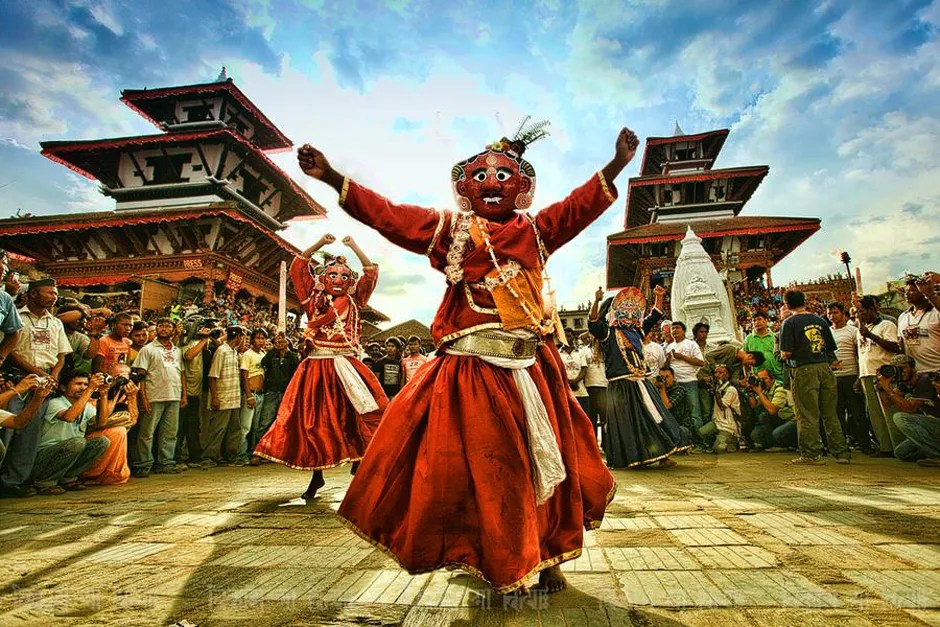
The festival also features various traditional dances that are both entertaining and steeped in religious significance. Among these, the “Lakhey” dance is particularly popular. Performers don elaborate masks and costumes to embody Lakhey, a benevolent demon believed to protect children. The dancers’ energetic movements and the rhythmic beats of the accompanying music captivate the audience, blending storytelling with performance art.
Indra Jatra is also a time for the display of various cultural artifacts and relics. The “Pulu Kisi,” a representation of Indra’s elephant, parades through the streets, with performers inside the large elephant costume enacting playful and dynamic scenes. This adds a touch of humor and lightheartedness to the festival, making it a joyful experience for people of all ages.
Throughout the eight days, religious rituals are performed at various temples and shrines dedicated to Indra and other deities. These rituals include offerings, prayers, and the lighting of oil lamps, all aimed at invoking blessings and ensuring the well-being of the community. The sacredness of these ceremonies is palpable, with devotees participating with deep reverence and devotion.
The final day of Indra Jatra is marked by the lowering of the Yosin pole, signaling the end of the festival. This event, known as “Yosin Khatne,” is performed with the same ceremonial fervor as its erection. As the pole is taken down, there is a sense of culmination and fulfillment, as the community reflects on the blessings received and the cultural heritage celebrated.
 ARTMO MAG
Leave a comment