
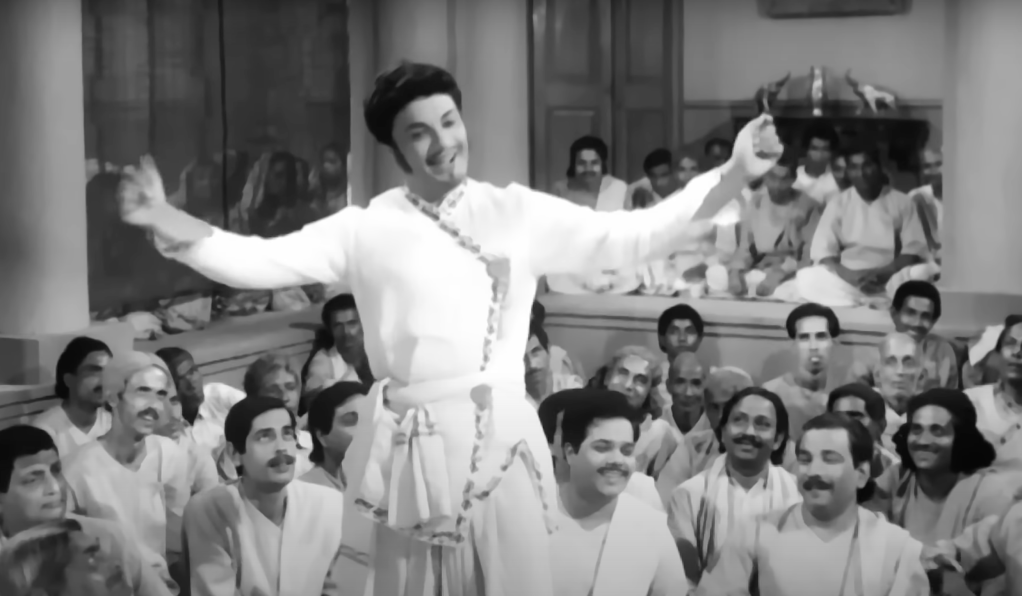
There’s something about Antony Firingee that stands out beyond its historical narrative. It tells the story of a man who navigates cultural boundaries while also offering a deeper exploration of music, tradition, and Bengali identity. Revisiting this film reveals that it isn’t just a relic of the past; it is a conversation across generations, a dialogue between what was and what could be.
The narrative follows Hensman Anthony, a Portuguese man who became deeply entrenched in Bengali culture. While his real name might be unfamiliar to many, the figure of Firingee Anthony has become ingrained in the Bengali consciousness—a foreigner who embraced local customs, language, and, most significantly, its music. The film invites us to walk alongside him, to feel the tension of being an outsider, and the gradual, almost inevitable pull toward belonging.
Anthony’s journey reflected a genuine love for the culture he adopted. His devotion to Kali, immersion in Bengali folk traditions, and role in the local community weren’t acts of superficial assimilation but expressions of a deeper connection that transcended his foreign origins. This narrative is about the universal quest to find one’s place in an initially alien world.

Anil Bagchi’s compositions in the film are more than just soundtracks—they are the language through which the film expresses its most profound truths. Each note, each rhythm, seems to be drawn from the very soil of Bengal, connecting the viewer to something deeper, something elemental. Yet, to fully appreciate this musical depth, one must look beyond the screen, into the life of Hensman Anthony—the individual behind the legend.
Born around 1786 in the French colony of Chandannagar, Hensman Anthony was of Portuguese descent. His life is a reflection to the confluence of cultures, embodying the meeting of East and West during an era marked by colonial rule. Although much of his early life remains a mystery, it is known that he arrived in Bengal in the early 19th century—a time when the region was a melting pot of cultures, religions, and traditions.
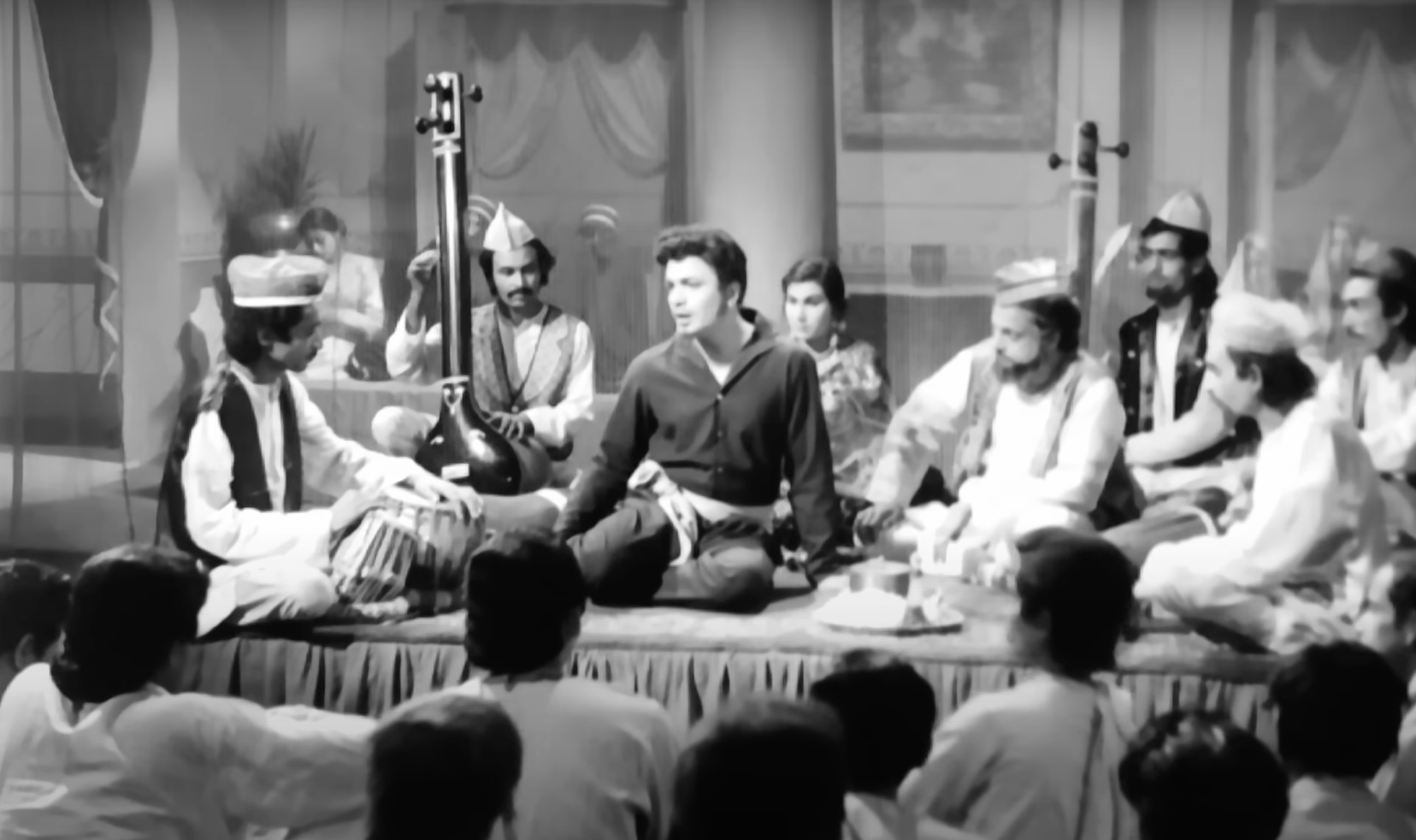
Settling in Chandannagar, Anthony quickly immersed himself in the local culture. His marriage to Saudamini, a Hindu Brahmin widow, was a bold move that challenged the rigid social norms of the time. This union went beyond personal rebellion, symbolizing his full integration into Bengali society. Saudamini’s influence on Anthony was profound, introducing him to the rich traditions of Bengali folk music and the devotional practices dedicated to the goddess Kali.
With time Anthony’s devotion to Kali became a cornerstone of his identity. He embraced Bengali customs and actively contributed to the culture that welcomed him. His songs, particularly those dedicated to Kali and Durga, are imbued with a sense of spiritual yearning and cultural syncretism. These were not the compositions of a foreigner trying to fit in; they were the creations of a man who had found his spiritual and cultural home in Bengal. His Agamani songs, celebrating Durga’s return during the autumn festival, are especially notable for their devotional fervor and deep understanding of local religious sentiments.
However, Anthony’s contributions weren’t just limited to devotional music. He played a significant role in the world of Kobigan—a form of literary face-off that was immensely popular in Bengal during the 19th century. Kobigan, or bard’s duels, were not just about music; they were intellectual battles where poets and singers engaged in poetic debate, showcasing their wit, knowledge, and artistic skills. Anthony’s participation in these duels with notable Bengali poets like Bhola Moira, Ram Basu, and Thakur Singha established him as a formidable figure in Bengali folk culture. His compositions, often reflective of the humanist and universal themes found in Bengali traditions, resonated deeply with the people, blurring the lines between the sacred and the secular.
The story depicted in the film, however, is not just about Anthony’s musical achievements. It is about his defiance of the colonial and Brahminical hierarchies that sought to define and confine cultural identities. Despite being a Firingee—a foreigner—Anthony held his ground in a society that was quick to judge based on lineage and religion. His refusal to be ridiculed for his origins and his ability to carve out a space for himself in Bengali culture speaks to his deep understanding of the complexities of identity in colonial Bengal.

Anthony’s life, much like his music, was a blend of influences—a synthesis of the Portuguese and the Bengali, the colonial and the indigenous. This cultural amalgamation made him a unique figure in Bengali history. He played an active role in Bengal’s cultural life, shaping and contributing to the development of Bengali folk traditions. His legacy is preserved not only in the songs he composed but also in the temple he built in Bowbazar, Kolkata—the Firinghi Kalibari—a lasting example to his devotion and integration into Bengali society.
The film captures the essence of Hensman Anthony’s life, but to truly understand the man, one must look beyond the cinematic portrayal. His story is one of cultural fusion, of finding and creating an identity that transcended the boundaries of race, religion, and tradition. Through Anthony’s story, we are reminded that cultural identity is not something we are born with—it is something we create through our actions, choices, and willingness to embrace the unfamiliar.
As Kobigan faces the risk of fading into obscurity, this nearly 60-year-old film stands as more than a narrative—it serves as a vital conduit to a rich yet vulnerable cultural heritage. It is a cinematic work that merits revisitation, not merely for its historical significance, but for the enduring lessons it imparts. For those wishing to engage with this important piece of cultural history, Anthony Firengi is available to stream on Amazon Prime.
Citations:
- IMDb. (1967). Anthony Firingee. IMDb. Retrieved from https://www.imdb.com/title/tt0236385/
- Chaudhuri, R. (2002). Gentlemen Poets in Colonial Bengal: Emergent Nationalism and the Orientalist Project. Seagull Books.
- Chatterjee, P. (1993). The Nation and Its Fragments: Colonial and Postcolonial Histories. Princeton University Press.

 ARTMO MAG
Leave a comment