
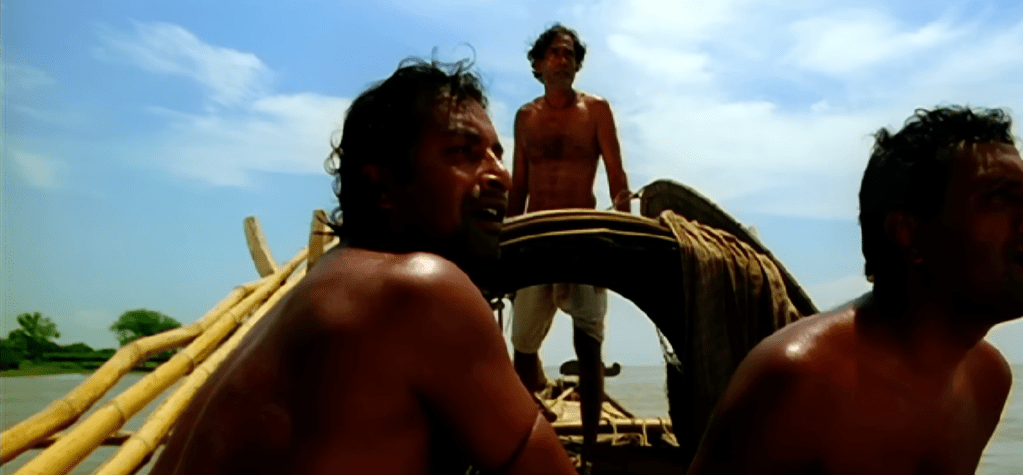
As one stands by the banks of the Padma River, the immense stretch of its waters seems to consume the horizon. The river, with its powerful currents and teeming life, is a vast, overwhelming presence, seemingly infinite yet intensely intimate. One can easily imagine small fishing boats navigating its unpredictable flow, their inhabitants driven by a kind of fatalistic perseverance, at once humble and heroic. This river has seen countless journeys, but none as deeply resonant as the story told in Padma Nadir Majhi—Manik Bandopadhyay’s haunting portrayal of human resilience, struggle, and survival.
Padma Nadir Majhi, directed by Goutam Ghose in 1993, is an evocative cinematic adaptation of Bandopadhyay’s novella. The film’s haunting beauty lies not only in its storytelling but in its remarkable visual and atmospheric mastery, bringing to life the gritty and complex world of the fishermen who dwell along the Padma River. Ghose transforms this literary tale into a visceral experience, melding the simplicity of life’s day-to-day struggles with the deep undercurrents of human emotions, dreams, and desires.

At its core, the film is a story of survival. Set against the backdrop of a village located by the vast and sometimes treacherous Padma River, the film follows the life of Kuber, a boatman who ekes out a meager existence with his family. Kuber, played by Raisul Islam Asad, is a man marked by quiet desperation. His portrayal of the character’s turmoil, expressed through subtle gestures and muted tones, allows the audience to deeply empathize with the weight of his burdens. In his struggle to provide for his family, Kuber becomes a mirror for the viewer, reflecting the universal pursuit of dignity amidst poverty and uncertainty.
What makes Goutam Ghose’s adaptation stand apart is the immersive atmosphere he creates through cinematography and use of natural settings. The Padma River itself is not merely a backdrop but a silent, ever-present force that dictates the rhythm of life in the village. Ghose captures the Padma in all its moods—serene in moments of reflection and menacing when it swells and threatens to consume everything in its path. The river’s vastness, its timeless ebb and flow, mirrors the existential struggles of Kuber and the other villagers who rely on it for their survival. Ghose’s camera lingers over the landscape, allowing the river to almost become a character in its own right, imbued with both beauty and danger.
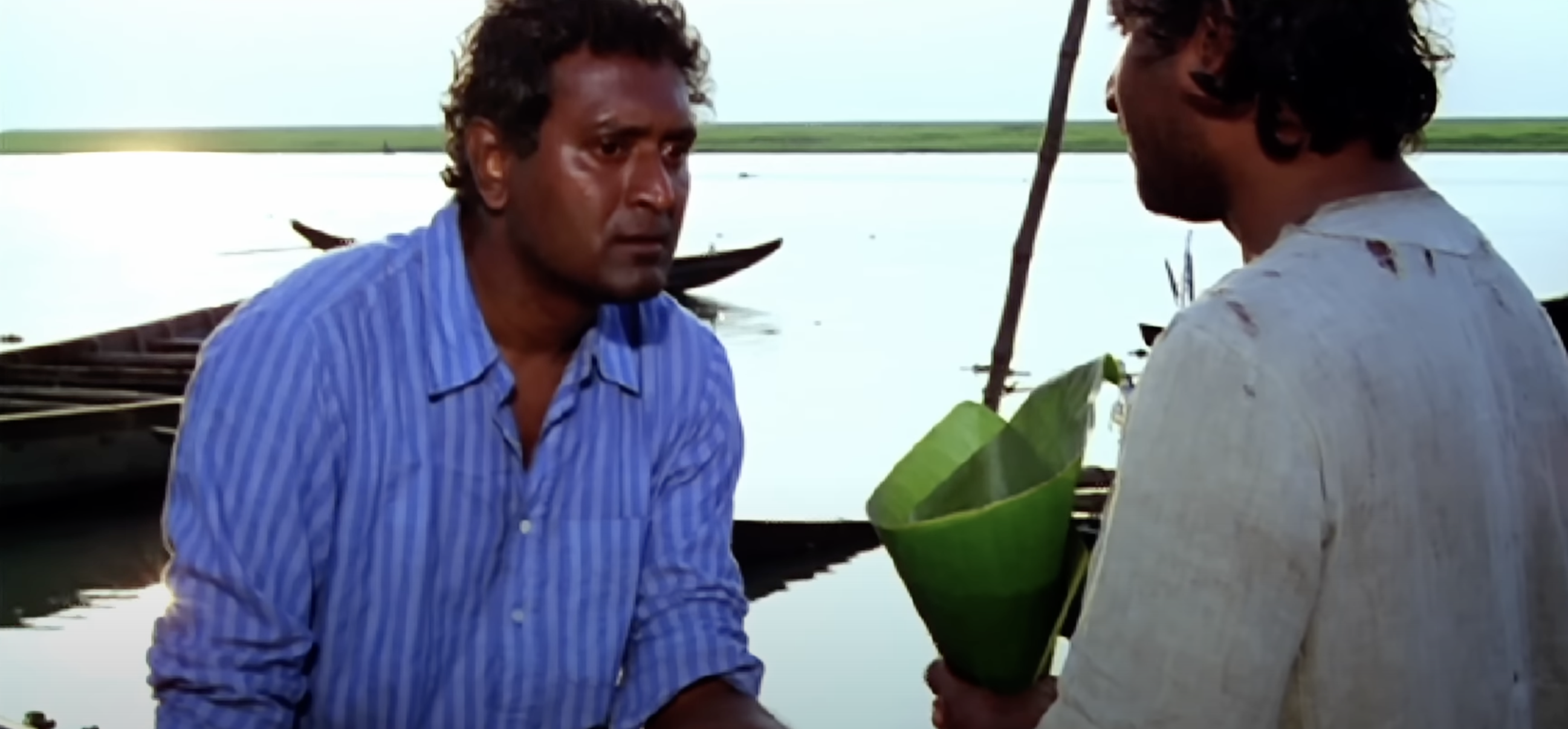
The film’s visual aesthetic is deeply rooted in a kind of rustic realism. The village is portrayed in its raw, unpolished state, with boats lining the muddy shores, huts precariously balanced on the edge of the water, and the villagers’ faces weathered by years of labor. Ghose’s attention to detail in the production design is impeccable—nothing feels out of place or overly dramatized. The simplicity of the mise-en-scène draws the viewer into the world of the characters, making every frame a tableau of life along the Padma. Ghose’s use of natural lighting further enhances the realism, with scenes often bathed in the soft, golden hues of dawn or dusk, amplifying the poetic quality of the film without straying into sentimentality.
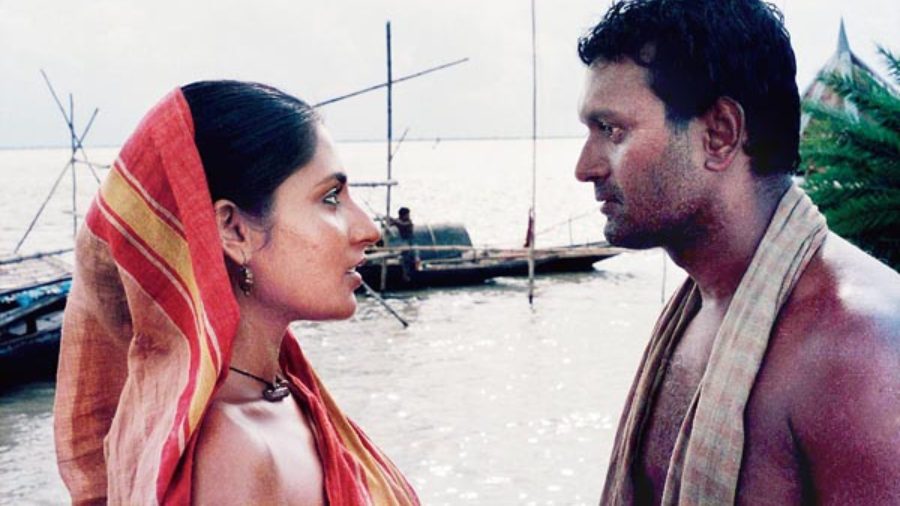
Raisul Islam Asad’s portrayal of Kuber is a masterclass in understated acting. He brings a quiet intensity to the role, his internal struggles always bubbling just beneath the surface. The character is not one given to outbursts or grand gestures, but Kapur’s ability to convey Kuber’s inner turmoil through his expressions, the tiredness in his gait, and the way he interacts with his family is deeply affecting. The film delves into Kuber’s attraction to Kapila, played by Rupa Ganguly, with a subtlety that avoids overt melodrama. Their relationship, steeped in unspoken tension, is one of the many layers of desire, frustration, and longing that Ghose deftly weaves throughout the narrative.
Kapila, a complex character in her own right, represents more than just an object of Kuber’s desire. Rupa Ganguly brings a magnetic presence to the screen, portraying Kapila as both sensual and enigmatic. She is at once a symbol of unattainable beauty and a woman bound by her own circumstances. Her relationship with Kuber is fraught with unfulfilled longing, and Ghose allows the camera to linger on their charged moments of interaction, never rushing the emotional beats. The film’s pacing in these scenes is deliberate, allowing the viewer to feel the weight of what remains unspoken between them.
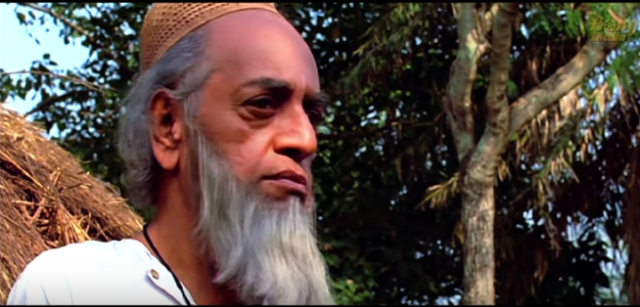
Another standout character is Hossain Miyan, portrayed by Utpal Dutt. As a figure who dreams of a utopian land called Moynadeep, Hossain Miyan injects a note of escapism into the film’s otherwise stark realism. His grand vision of Moynadeep is painted with hope and an almost childlike belief in the possibility of a better life, yet Ghose never fully reveals whether this dream is tangible or merely an illusion. Hossain Miyan’s faith in Moynadeep speaks to the broader human tendency to search for meaning and a better existence, even when reality offers little promise.
While the film explores the inner lives of its characters, it is also deeply concerned with the physicality of their world. Ghose captures the texture of village life with a keen eye—the sound of the oars slicing through the water, the smell of fish drying in the sun, and the ceaseless activity of the boats that carry goods, and sometimes people, across the Padma. The director’s attention to the sensory aspects of life along the river adds a layer of authenticity to the film that is hard to replicate in most cinematic adaptations. Every sound, from the lapping of the water to the creaking of the boats, reinforces the connection between the characters and their environment.

The sound design in Padma Nadir Majhi plays a crucial role in shaping the film’s emotional landscape. Ghose often uses silence to great effect, allowing the absence of sound to heighten the tension between characters or underscore moments of isolation and reflection. When sound is employed, it is carefully chosen—a distant cry, the rustling of leaves, or the soft lap of the river. The film’s score, composed by Ghose himself, is subtle and unobtrusive, its melancholic notes providing a gentle accompaniment to the film’s more emotional moments without overpowering the natural sounds of the environment.
In many ways, the film is a meditation on the inescapable nature of life’s struggles, yet Ghose infuses the film with a quiet dignity. The characters are never reduced to caricatures of poverty or suffering; instead, they are fully realized individuals with their own desires, frustrations, and hopes. Ghose’s sensitivity to the emotional and psychological complexities of his characters elevates the film beyond a mere tale of survival. It becomes a rich exploration of what it means to live, to desire, and to dream, even in the face of overwhelming hardship.
Padma Nadir Majhi is a film that transcends its regional setting to speak to universal themes of human existence. Goutam Ghose’s deft direction, combined with stellar performances from the cast, a rich visual palette, and a deeply immersive soundscape, makes this adaptation not only a faithful representation of Manik Bandopadhyay’s novella but a powerful work of cinema in its own right. Through its careful balancing of realism and poetic beauty, the film becomes a profound meditation on the human condition, as unyielding and ever-changing as the river that gives it its name.


 ARTMO MAG
Leave a comment