
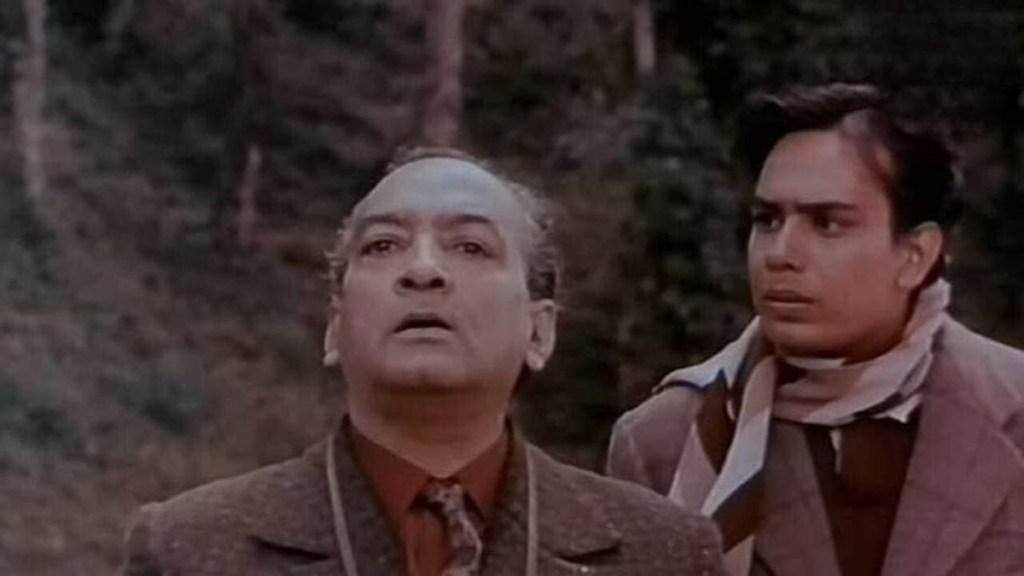
In 1962, Satyajit Ray ventured into something unique with his film Kanchenjungha. Set against the backdrop of the mist-covered hills of Darjeeling, Ray’s film offers a departure from the more structured, linear narratives of his earlier works. In Kanchenjungha, Ray experiments with form, time, and space, crafting a subtle yet poignant meditation on human relationships, personal ambitions, and societal pressures. What makes Kanchenjungha stand out, aside from Ray’s skillful direction and screenplay, is the way it unfolds—much like the slow dissipation of fog in the mountains, gradually revealing truths that lie beneath the surface. It is a work that calls for reflection, both on the part of the characters and the audience.
Ray, who both wrote and directed the film, constructs a narrative that occurs in real-time, a single afternoon in Darjeeling, as a wealthy Bengali family navigates their internal dynamics, strained relationships, and unsaid expectations. The family, led by the authoritarian Indranath, played with quiet intensity by Chhabi Biswas, is ostensibly on vacation, but as the day unfolds, it becomes clear that the trip is more than a casual getaway. Ray deftly uses the vacation setting as a microcosm of the characters’ larger lives, where social hierarchies, generational conflicts, and personal aspirations simmer just beneath the picturesque surface of a hill station holiday.
The film revolves around Indranath, a successful industrialist, who exerts control not just over his family but also over their futures. He has planned out his daughter Monisha’s marriage to a young, affluent suitor, who, despite being well-bred, lacks the warmth or passion Monisha longs for. Monisha, played with a restrained vulnerability by Alaknanda Roy, is caught between her father’s expectations and her own unspoken desires. Ray subtly contrasts her quiet internal struggle with her younger sister Anima’s more carefree demeanor, showing the varying degrees of freedom and repression experienced by women within the same family, each navigating different stages of life.

Ray’s screenplay doesn’t follow a single trajectory; instead, the story unfolds through a series of vignettes as the family members wander through Darjeeling, having conversations that reveal their inner conflicts. These seemingly disjointed interactions allow Ray to explore a wide range of human emotions, from disappointment to hope, without needing overt dramatic gestures. There’s an understated elegance to Ray’s storytelling, where the real drama lies not in what is said, but in what remains unspoken. The fog-covered landscape becomes an apt metaphor for the layers of hidden tensions and desires that shape the characters’ relationships with one another.
The cinematography of Kanchenjungha, done by Soumendu Roy, is integral to the film’s tone and mood. The constant presence of the fog in the hills serves as a visual metaphor for the uncertainty and ambiguity in the characters’ lives. Ray was always a master at using landscape to reflect inner turmoil, and in Kanchenjungha, Darjeeling itself becomes a character. The overcast skies and misty hills evoke a sense of introspection, a setting that pushes each character to confront their own realities. Ray’s decision to shoot in color adds a layer of richness to the visual storytelling, particularly the use of muted tones, which reflect the subdued emotional palette of the film. The mist, almost omnipresent throughout the film, allows Ray to blur the lines between characters’ emotional clarity and confusion, just as the mountain fog blurs the physical world.
Each interaction in the film feels weighty, as if the mist is holding the characters’ emotions in suspension, refusing to let them escape easily. The mountain peaks, especially the elusive Kanchenjungha itself, are rarely visible, a tantalizing reminder of the unattainable ideals and desires that each character is grappling with. Ray uses the geography of Darjeeling with purpose—at once beautiful and oppressive, it becomes a perfect stage for his exploration of human frailty.
One of Ray’s most impressive directorial decisions is his use of sound—or the deliberate lack thereof. Conversations between characters are often interrupted by the sounds of birds, the rustling of the wind, or the distant hum of Darjeeling’s everyday life. These interruptions aren’t mere background noise; they add to the film’s reflective quality, reminding the audience of the natural world that continues indifferent to human conflicts. The quietude of the film is haunting, emphasizing the emotional isolation that the characters feel despite their physical proximity to one another. The silences between words speak volumes, something Ray excels at orchestrating.
Indranath’s interactions with his family are cold, almost bureaucratic. He expects obedience and loyalty, much like he commands respect in his business world. His wife, Labanya, portrayed with quiet dignity by Karuna Banerjee, has long since learned to navigate his domineering presence with silence. In one of the film’s more poignant moments, Labanya sits alone on a bench, gazing into the distance as the fog swirls around her, a symbol of her own quiet resignation. Ray’s portrayal of their marriage is not one of overt conflict but of quiet, enduring suppression. It’s a marriage where the real communication has long since vanished, buried under years of unspoken resentment and conformity.

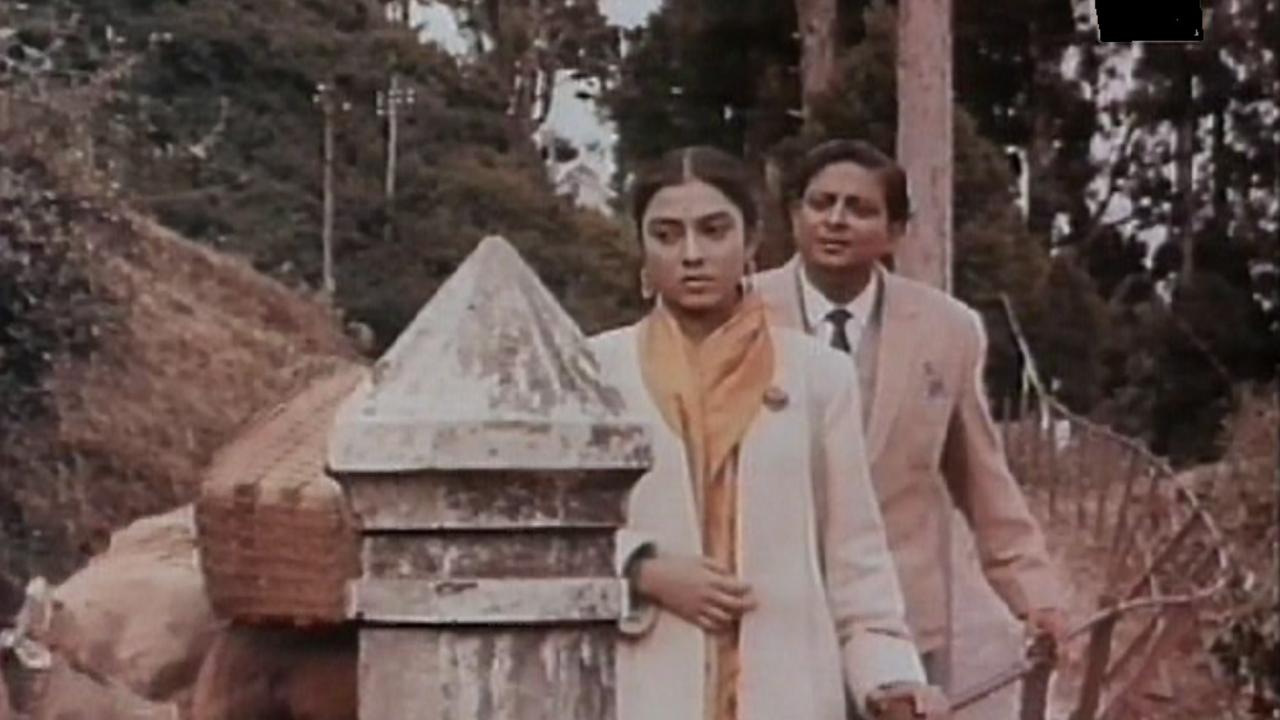
Perhaps the film’s most significant character arc is Monisha’s. Throughout the film, she wrestles with the reality of her impending marriage to a man she does not love. Her rebellion is internalized, manifesting in small moments—her thoughtful silences, her cautious interactions with her father. In one of the film’s most striking sequences, she meets Ashok, an idealistic young man, who, in contrast to her stifling suitor, represents freedom and emotional honesty. Their interaction is brief but charged with possibility, as Ashok’s worldview offers Monisha a glimpse of a life not dictated by her father’s plans. However, Ray leaves their future ambiguous, much like the fog that never quite lifts from the mountains, suggesting that Monisha’s struggle for autonomy may not lead to an immediate resolution.
Ray’s genius lies in his ability to weave these personal struggles with broader social commentary. Kanchenjungha subtly critiques the patriarchal and capitalist structures of Indian society, where women, even in upper-class families, often have little say in their own futures. Indranath’s control over his daughters’ lives mirrors his control over his business empire, and in both cases, Ray portrays a world where authority and power are intertwined with personal ambition. Yet, Ray refrains from heavy-handed moralizing; instead, he allows these themes to emerge naturally from the interactions between the characters.
The use of natural light in the film further enhances its contemplative atmosphere. Ray’s longtime collaborator, cinematographer Soumendu Roy, captures the shifting light of the Darjeeling sky with precision, creating a visual rhythm that mirrors the ebb and flow of the characters’ emotions. As the afternoon light fades into twilight, there’s a palpable sense of time slipping away, of decisions that need to be made before the day ends. The changing light becomes a visual metaphor for the characters’ own shifting perspectives—what seemed certain in the morning is no longer so by evening.

The film ends on an ambiguous note, with the family gathering for dinner, their internal conflicts unresolved, the future uncertain. The fog continues to linger over the hills, and the peak of Kanchenjungha remains hidden. The film suggests that while the characters may move forward with their lives, their struggles with identity, autonomy, and societal expectation will continue, much like the ever-present mist that refuses to fully dissipate.
Ray’s Kanchenjungha is a masterclass in subtle storytelling, a film where the emotional landscape is as complex as the physical one. Through its exploration of personal and familial dynamics, set against the ethereal beauty of Darjeeling, Ray creates a film that is both timeless and deeply human, one that lingers in the mind long after the mist has cleared.
This film can be watched on Mubi.
 ARTMO MAG
Leave a comment