
Deya Neya (1963), a Bengali romantic comedy directed by Sunil Bandopadhyay, is often classified as a commercial film due to its broad appeal, musical numbers, and lighthearted storyline. However, beneath its popular exterior lies a film that has many qualities typically attributed to art cinema. With its subtle exploration of societal expectations, artistic aspirations, and personal identity, Deya Neya can be viewed as an understated art film.
At its heart, Deya Neya tells the story of Prasanta, played by the legendary Uttam Kumar, the estranged son of a wealthy industrialist, who dreams of becoming a singer against his father’s wishes. Disguising himself as a humble driver, he adopts the alias “Abhijit” to pursue his career in Kolkata.
The conflict between personal ambition and family duty is a recurring theme, lending depth to what could otherwise be seen as a straightforward love story. In many ways, this is where the film transcends its commercial framework, engaging with issues of self-realization and rebellion against societal norms.
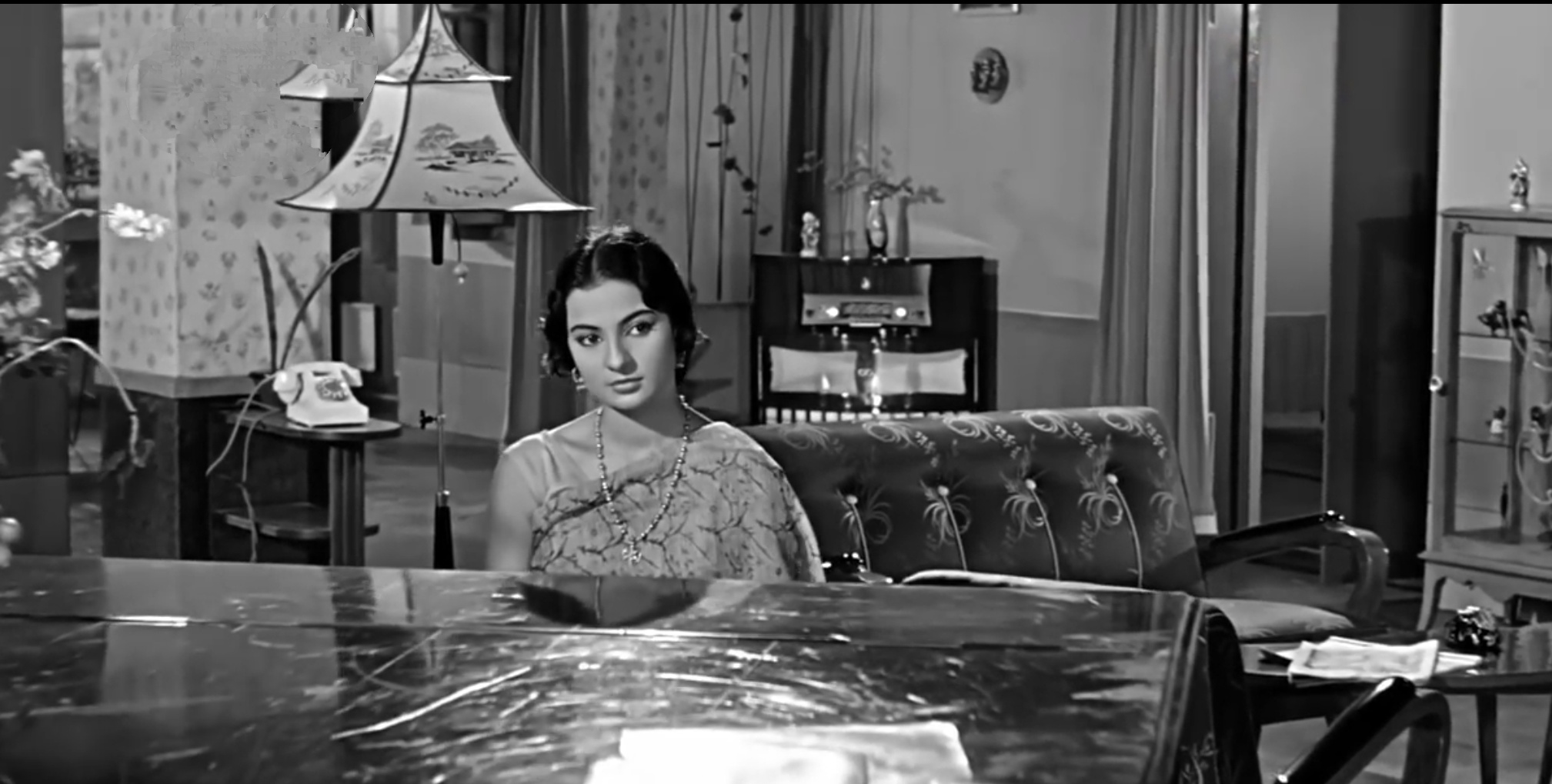
Uttam Kumar, one of Bengali cinema’s most celebrated actors, delivers a nuanced portrayal of Prasanta. His duality — oscillating between the obedient son and the rebellious artist — brings a quiet intensity to the role. His onscreen chemistry with Tanuja, who plays Sucharita, the young woman he falls in love with, is another highlight of the film.
Tanuja, in her debut in Bengali cinema, gives a lively and emotionally resonant performance, embodying the quintessential romantic heroine with a blend of innocence and strength. Despite the film’s romantic tropes, the way these characters navigate their individual dilemmas elevates Deya Neya beyond the simplicity of a mere love story.

The film’s cinematography, while not groundbreaking in the conventional sense, contributes to its artistic quality by focusing on the emotional landscapes of the characters. The camera lingers on moments of introspection, emphasizing the inner conflict of Prasanta, particularly in scenes where he grapples with the tension between his public and private selves.
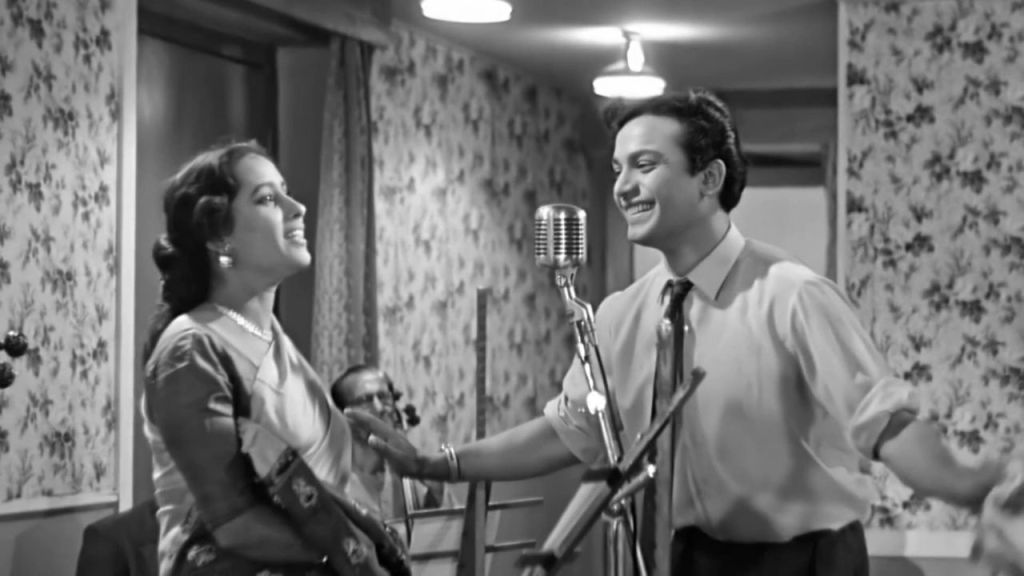
The use of close-ups during Prasanta’s musical performances, where he is revealed as the anonymous singer “Abhijit,” underscores the theme of dual identity and the façade he must maintain. Cinematically, these choices align with the more meditative, character-driven focus of art films.
Music plays a central role in Deya Neya as an integral part of the narrative. The film’s score, composed by Shyamal Mitra, is woven into the story itself, with Prasanta’s identity as a singer driving much of the plot. Songs like “Ami Cheye Cheye Dekhi Saradin” and “Dole Dodul Dole Jhulana” became instant hits, contributing to the film’s widespread popularity.
However, the significance of the music goes beyond its catchy melodies; the songs mirror Prasanta’s emotional journey, from his struggles with anonymity to the joy of being recognized for his talents. This interplay between the narrative and the soundtrack enriches the film’s thematic complexity, as music becomes a metaphor for personal expression and liberation.
Sunil Bandopadhyay’s direction maintains a delicate balance between the commercial and the artistic. While Deya Neya has all the hallmarks of a mainstream film — including moments of comedy, romance, and familial drama — Bandopadhyay injects a certain introspective quality that resonates with viewers on a deeper level.
The director allows space for the characters to breathe, particularly in scenes where Prasanta is torn between his duty to his family and his passion for music. This contemplative pacing, combined with the film’s focus on character development, lends it the quiet intensity often found in art films.
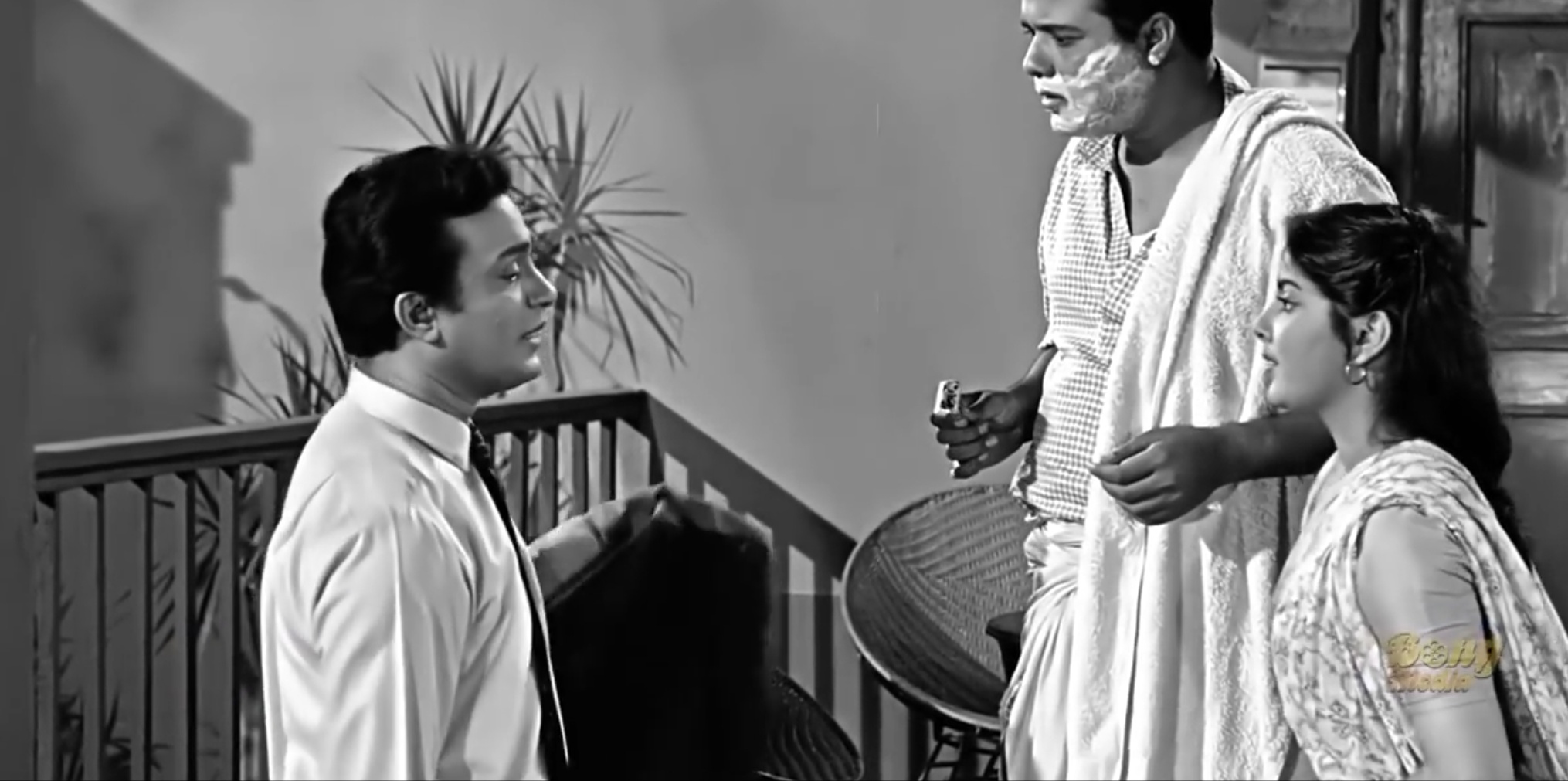
In addition to the performances of Uttam Kumar and Tanuja, the supporting cast, including Pahari Sanyal as Amritlal and Kamal Mitra as Prasanta’s father BK Roy, play pivotal roles in grounding the film’s more melodramatic elements.
Amritlal’s humorous yet wise presence adds a layer of warmth to the narrative, while BK Roy’s authoritarian demeanor introduces the conflict that drives the plot forward. Their performances are essential in building the film’s emotional depth and providing the necessary counterpoints to Prasanta’s internal struggle.
Despite being a commercial success, Deya Neya is not without its contemplative moments. The film subtly critiques the rigid social structures that dictate familial and professional obligations, with Prasanta’s journey reflecting a larger struggle against the expectations placed on him as the heir to an industrial empire.
His rejection of this path in favor of a career in the arts serves as a quiet rebellion, challenging the notion that financial success is the only measure of achievement. This theme, while not overtly political, speaks to the personal battles that many individuals face in reconciling their dreams with societal pressures — a theme that resonates with the ethos of art cinema.
Moreover, the film’s resolution, in which Prasanta’s father finally accepts his son’s career as a singer, reflects a more progressive and humanistic worldview. The reconciliation isn’t just a familial one, but also a validation of Prasanta’s personal and artistic identity. This moment of acceptance, while perhaps typical of commercial cinema’s need for a happy ending, carries deeper implications about individual freedom and the right to self-determination.
While the film entertains with its romance, music, and family drama, it also engages with more profound themes of personal identity, societal expectations, and the artist’s struggle for recognition. The thoughtful character portrayals, understated cinematography, and resonant soundtrack elevate it beyond the realm of typical romantic comedies, allowing it to be appreciated not just as a commercial success but also as a work of artistic merit.
 ARTMO MAG
Leave a comment