
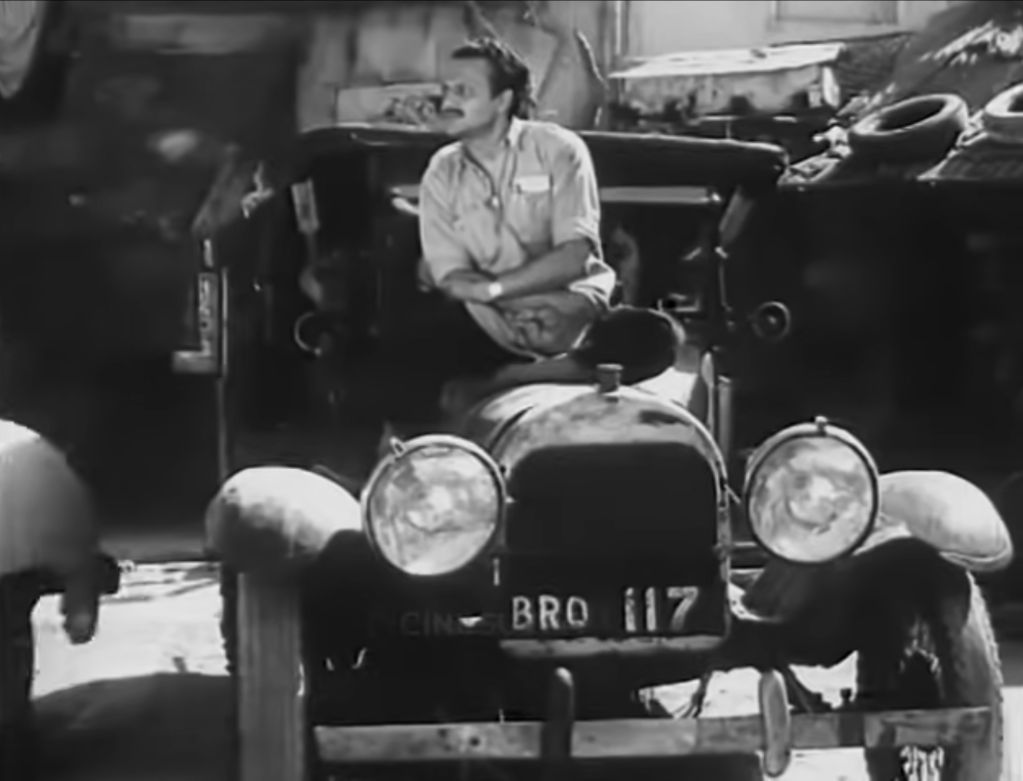
Ritwik Ghatak’s Ajantrik (1958), known in translation as The Pathetic Fallacy, explores a deeply unusual companionship: that between Bimal, a rural taxi driver, and his dilapidated, affectionately named 1920 Chevrolet car, Jagaddal. Unlike many films of its time, Ajantrik anthropomorphizes a machine with nuanced, almost spiritual overtones, investigating a driver’s attachment to his aging vehicle with a blend of humor, existential angst, and a uniquely Bengali poetic sensibility.
Ghatak, a filmmaker deeply entwined with the partition of India and its impact on cultural identity, uses this narrative to traverse questions of modernity, industrial alienation, and human attachment in an evolving post-colonial India.
The narrative is strikingly episodic: Ghatak presents glimpses into Bimal’s life as he shuttles a cross-section of society through the winding paths of Chotanagpur. The passengers range from a hurried wedding party to a destitute old man, each journey revealing subtle undercurrents of Bimal’s world—a rural landscape on the cusp of industrial change yet untouched by its full force.
Jagaddal, his vehicle, provides Bimal his livelihood while also serving as his confidant. Hence, a silent partner bearing witness to his emotions and struggles. This relationship encapsulates the titular “pathetic fallacy”—an emotional projection onto an inanimate object—a theme Ghatak renders with paradoxical tenderness and absurdity. The car’s rattles, creaks, and stubborn breakdowns reflect the friction between traditional lives and the creeping inevitability of mechanization.
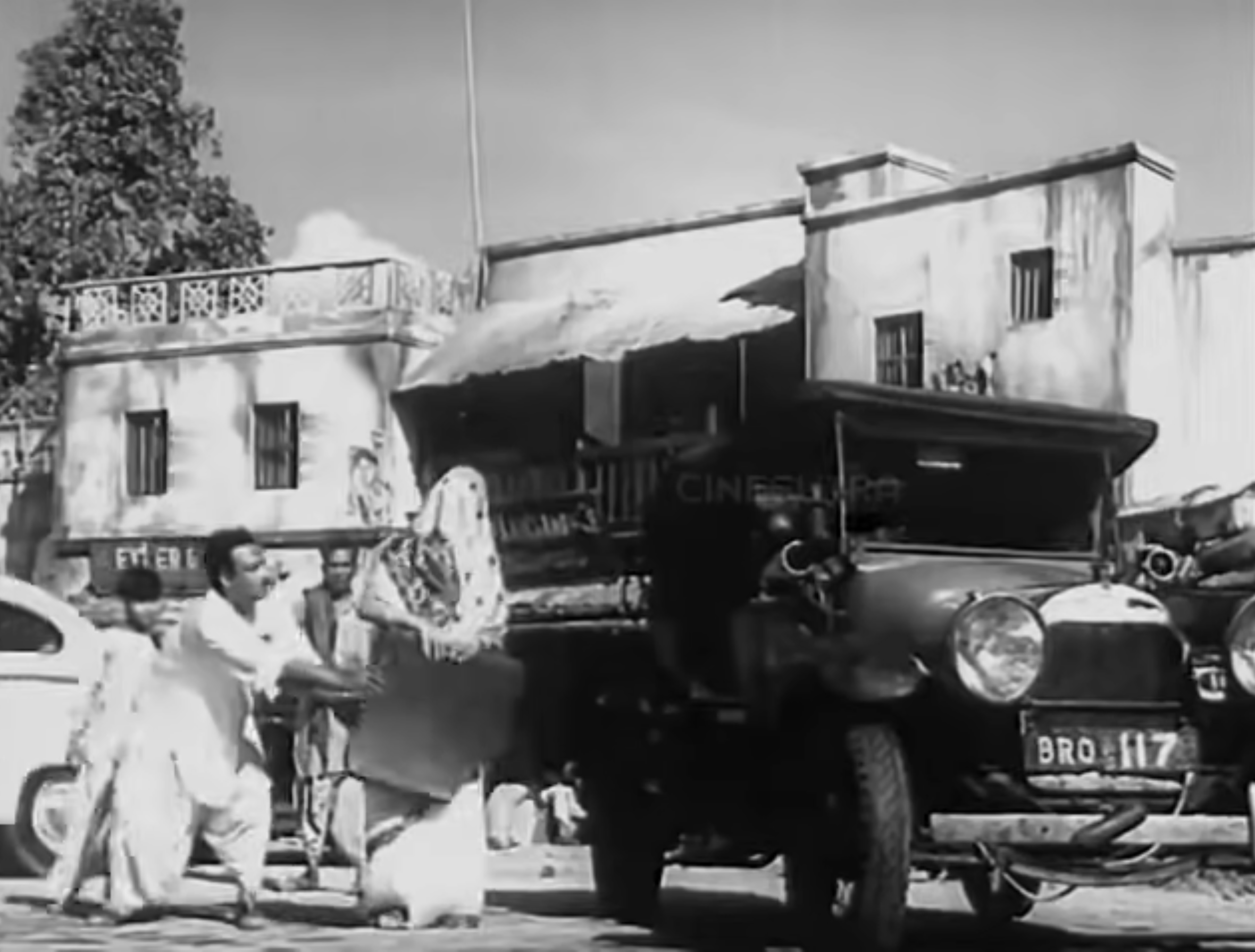
Ghatak’s direction in Ajantrik is bold and stylistically stark, an approach underscored by his innovative use of sound and cinematography. The rural landscapes, which were filmed in Chotanagpur, provide a raw and untouched backdrop, amplifying the contrast between Bimal’s intimate attachment to Jagaddal and his interactions with an increasingly utilitarian world.
Ghatak uses close-ups of Jagaddal to emphasize the car’s battered state, making its rusted surface and tired engine pivotal elements of its “character.” The imagery—arid fields, lonely roads, and mechanical debris—echoes Ghatak’s broader preoccupation with desolation, displacement, and the longing for permanence in a shifting reality.
By framing the narrative around Bimal’s conversations with Jagaddal, Ghatak achieves an arresting subversion of conventional narrative focus: the car, though voiceless, becomes a powerful symbol of companionship and steadfastness in an otherwise fragmented world.
This interplay of human and machine also finds resonance in Bimal’s performance, delivered with extraordinary depth by Kali Banerjee. Banerjee captures Bimal’s attachment to Jagaddal with a quiet intensity that skirts melodrama, instead revealing the sorrow of Bimal’s loneliness and his resistance to change.
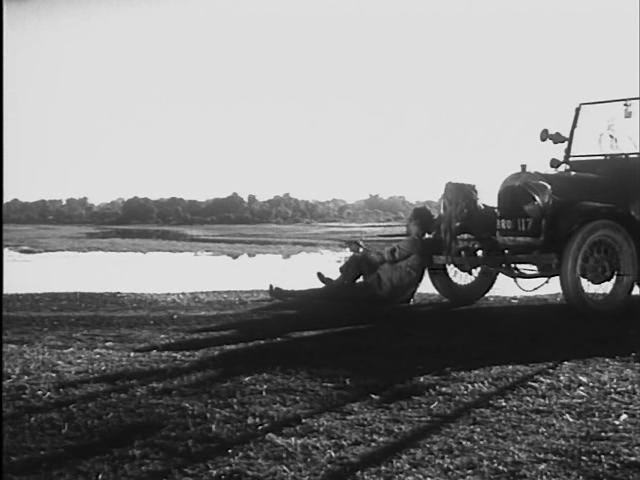
The film places Bimal as someone whose very identity has fused with the machine, a metaphor for Ghatak’s view of mechanization’s incursion into human life. Bimal’s love for Jagaddal, which he names like a family member, reflects Ghatak’s commentary on how modernity reshapes human relationships—not only among people but with the objects that fill their worlds.
Ghatak’s use of sound, contributed by renowned musician Ustad Ali Akbar Khan, further complements the film’s thematic depth. From the distinctive rumblings of Jagaddal’s engine to the surrounding cacophony of rural life, the soundscape brings an unusual vibrancy to the scenes.
Instead of a traditional score, Ghatak employs naturalistic sounds to add weight to Bimal’s solitary world, immersing the audience in an ambient reflection of his inner state. The sounds underscore Bimal’s existential plight: Jagaddal’s breakdowns become symbolic pauses, reflecting the rifts in his own psyche as he contemplates life’s fragility.
Ghatak believed in a cinema where sound is not simply an accessory but a narrative force, and Ajantrik exemplifies this philosophy by giving voice to silence, to mechanical whirs, and even to the absence of human warmth.
Philosophically, Ajantrik engages with a complex layer of ideas tied to post-colonial identity, industrial progress, and personal alienation. Ghatak’s film, made over a decade after India’s independence, represents a departure from the typical nationalist sentiment of the era. Instead, it critiques the dehumanizing march of progress that ignores individuals’ intimate bonds with place, object, and memory.
Bimal’s connection to Jagaddal serves as a microcosm of the larger struggle against the anonymity of modernization—a sentiment that recalls Ghatak’s broader body of work, in which he often explores displacement and identity within the context of partition and cultural upheaval.
In the character of Bimal, Ghatak presents a man who resists societal indifference, whose love for his machine stands as a protest against disposability. This theme is further intensified in the film’s final moments when Jagaddal is dismantled as scrap, a stark reminder of impermanence and the commodification of sentimental attachments.
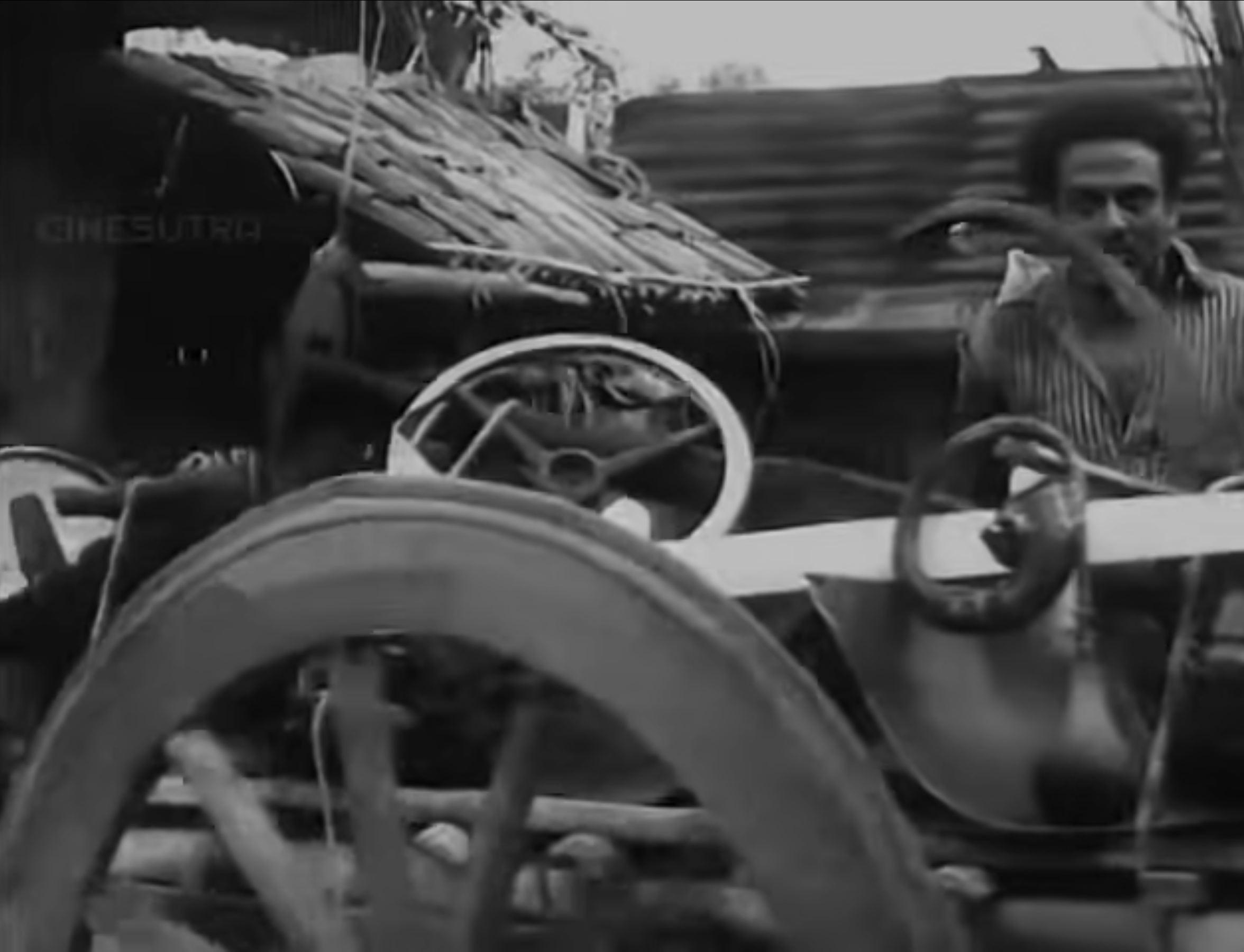
For Bimal, witnessing Jagaddal’s disassembly is akin to a personal bereavement. Ghatak subtly criticizes the disposability embedded in modern life, where even profound attachments can be dismantled for utility’s sake. Bimal’s grief is poignant, not just for the loss of a machine but for the realization that nothing—neither machines nor memories—survives the relentless advance of change.
Beyond his storytelling, Ghatak’s cinematic approach influenced later filmmakers who grappled with the human impact of industrial and political shifts. His films, including Ajantrik, have been instrumental in paving a philosophical path in Indian cinema where characters confront modernity’s existential crises head-on.
Ghatak’s approach to symbolism—embedding emotional significance in material objects—has resonated across decades, inspiring a lineage of directors who explore similar themes of alienation and nostalgia in changing times.
The film is a story without grand declarations, yet it resonates deeply, asking audiences to reflect on their own attachments and the invisible bonds they form with their surroundings. Through the quiet perseverance of Bimal and Jagaddal, Ajantrik lingers as a meditation on love, loss, and the haunting beauty of impermanence.
 ARTMO MAG
Leave a comment