
On humid afternoons in Kolkata, when the shadows of old colonial mansions stretch long across quiet lanes, a question lingers in the air. It is the question of shame — of morality that weighs like invisible chains, of whispered stories that women hear from their grandmothers and, years later, recount to their own daughters. Bengali cinema, like its literature, has long been preoccupied with these stories, mapping the evolution of morality through delicate threads of desire, disgrace, and resistance.
Here, morality is not a static edifice; it shifts and fractures as decades pass, sometimes disappearing like ripples in the Hooghly River and at other times standing tall, oppressive, and unmoving. From Sarat Chandra Chattopadhyay’s provocative heroines to Satyajit Ray’s piercing portraits of internal conflict, the question of shame in Bengali storytelling becomes both a mirror and a magnifying glass, exposing a society that judges, restrains, and yet yearns for freedom.
It is not difficult to imagine Kiranmayi — the heroine of Charitraheen — sitting under the sunless light of a flickering lamp, her chin lifted stubbornly as society turns its back on her. Sarat Chandra wrote her in 1917, but she feels as alive today as she did then: a woman accused of being “charitraheen” — characterless — because she dared to live a life beyond what the world prescribed for her.
For the women in Sarat Chandra’s stories, shame does not come from wrongdoing but from refusing to play the roles society writes for them. In Kiranmayi’s fiery spirit, in Devdas’s unmoored self-destruction, Sarat Chandra captured the suffocating judgment of a culture that measured morality not by compassion but by obedience.
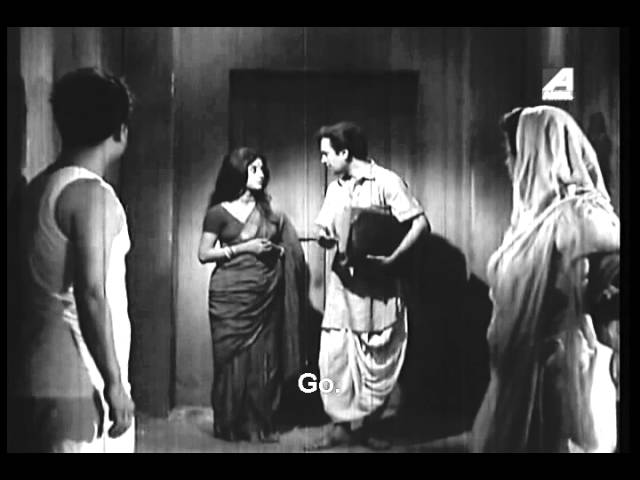
When Charitraheen found its cinematic adaptation first as Kalankito Nayak in 1970, later as the Hindi language remake in 1974, this tension between moral purity and defiance became visceral.
The film’s camera lingers on faces weighed down by unspoken words, the silence as damning as a public trial. And yet, it is Kiranmayi’s quiet dignity — her refusal to explain, excuse, or repent — that burns through the screen. Shame becomes not her burden but society’s indictment, a reflection of its hypocrisy rather than her failure.
The stories of Sarat Chandra belong to a different Bengal — a colonial Bengal where questions of caste, class, and gender shaped every intimate decision. And yet, they were as modern as they were rooted.
In Devdas, the titular character’s descent into self-destruction is as much about lost love as it is about his inability to resist the moral expectations of his class and caste. The tragedy of Devdas lies in his surrender, in his failure to wrest his fate from society’s hands. Directors who adapted Devdas to the screen understood this fundamental truth: shame, in his story, becomes a prison constructed as much within as without.

In the glow of dim lamps, with the echo of thumris in the background, Devdas spirals not because he is weak but because he is unable to reject the weight of what is expected. The cinematic language — close-ups that hold grief like a secret, shadows that swallow his silhouette — pulls the audience into his anguish, implicating them in a society that has claimed another life.
But the themes of shame and morality did not stay frozen in Sarat Chandra’s colonial world. As the 20th century progressed, and Bengali society began to fracture under the weight of independence and modernity, its cinema found new ways to interrogate these same moral questions.
The gentle ferocity of Satyajit Ray’s lens breathed life into these explorations, and in films such as Charulata and Ghare Baire, Ray questioned shame not as a tool of collective judgment but as an internalized burden. His characters rarely shout or rebel; instead, they suffer in silence, their conflict simmering beneath delicate gestures and quiet gazes.
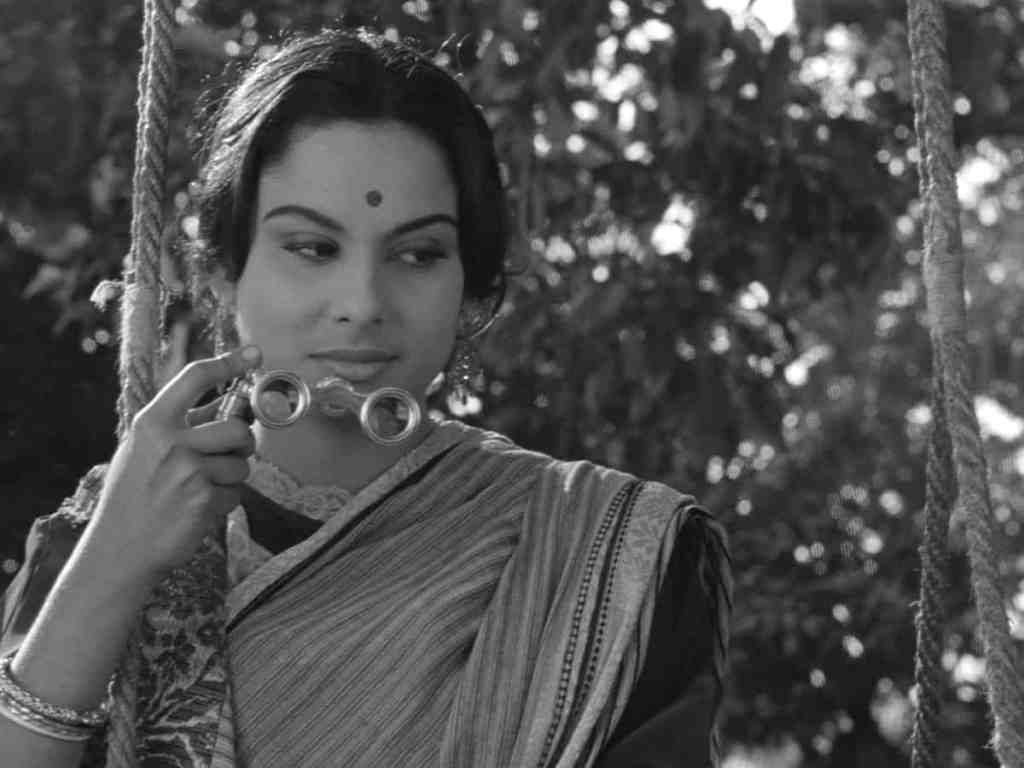
In Charulata, Ray adapts Rabindranath Tagore’s novella Nastanirh, creating a masterpiece that feels as fragile as a piece of lacework. Charu — lonely, stifled, and surrounded by silence — finds herself drawn to Amal, her husband’s younger cousin. It is not a grand affair but a soft, forbidden yearning, as natural as the leaves swaying outside her window. Yet the shame that threatens Charu is immense — it is the shame of desire itself, of feeling something beyond the boundaries set by marriage.
Ray does not condemn her; he does not need to. Instead, he allows us to see her — through opera glasses that shrink the world to manageable fragments, through long walks across empty verandas — and we understand. The shame here does not scream; it whispers, a quiet terror of being seen and judged.

Ray’s Ghare Baire offers a sharper critique of shame, positioning it within the currents of nationalism and personal freedom. Bimala, torn between her duty to her husband Nikhilesh and her attraction to the charismatic Sandip, becomes a symbol of Bengal itself: fractured, tempted, and disillusioned.
Ray’s brilliance lies in his refusal to simplify her conflict. Bimala is neither a villain nor a saint; she is human, and her desires are her own. But society does not permit women such complexities without judgment. In the film’s quiet moments — a glance, a hesitation, a word left unspoken — shame hovers like a specter, revealing the hollowness of a moral order that punishes women for seeking liberation while glorifying men for the same. This is where the evolution of shame in Bengali cinema becomes most compelling.
Sarat Chandra wrote in bold strokes, his characters standing against society like storm-battered trees. Ray, in contrast, painted with light and shadow, his characters turning inward, carrying shame like a secret they cannot put down.
It is this journey — from the fiery defiance of Charitraheen to the aching silences of Charulata — that marks a profound shift in how morality and shame are understood. Bengali cinema, through these adaptations, tells us something essential about ourselves: that shame is not innate, but imposed. It is a burden society teaches us to carry, a mirror held up to reflect its own contradictions.
And yet, even in the darkest of these stories, there is always the faintest glimmer of rebellion — a glance that does not look away, a silence that refuses to submit. These films, whether through Sarat Chandra’s bold heroines or Ray’s fragile protagonists, invite us to question not just the shame imposed on others but the discomfiture we impose on ourselves.
They remind us that morality is not a chain but a choice, and that the act of questioning itself can be an act of freedom. Through the evolution of shame and morality, Bengali cinema becomes more than a reflection of society; it becomes a promise of what we might yet become.
The list of films mentioned in this article and where to watch them –
1. Charitraheen – LINK
2. Charulata – LINK
3. Ghare Baire – LINK
4. Devdas – LINK (Also available to rent on Apple TV)
5. Kalankito Nayak – LINK
 ARTMO MAG
Leave a comment