
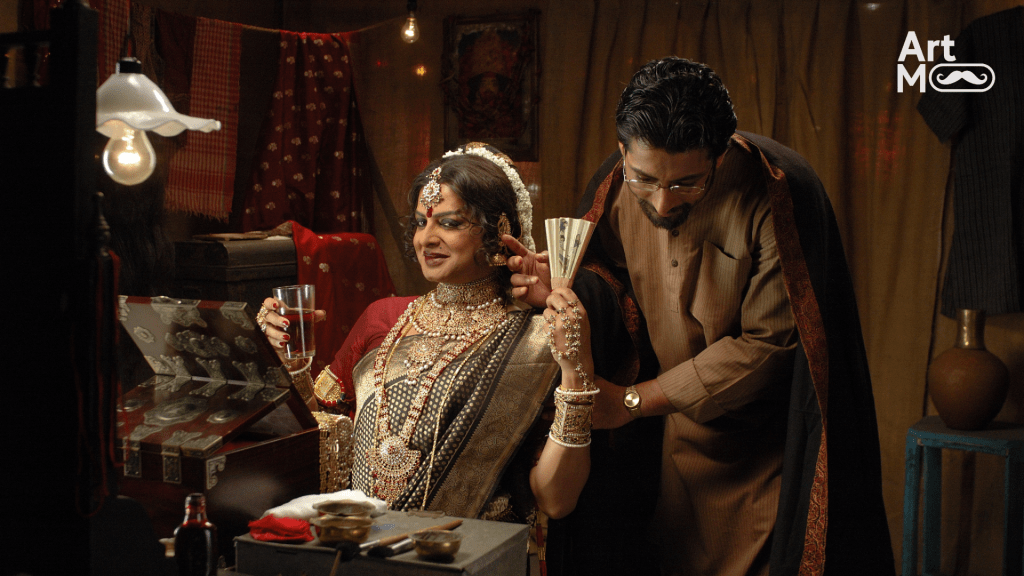
Rituparno Ghosh’s work stands as a rigorous inquiry into the intersections of identity, desire, and gender within the specific cultural context of Bengali society. In films like Chitrangada: The Crowning Wish (2012) and The Last Lear (2007), Ghosh moves beyond conventional narrative forms to interrogate the prevailing structures that define and confine individual experience. His approach is neither sentimental nor didactic; instead, it offers a measured critique of the societal norms that underpin the performative aspects of gender and identity. By reframing the discourse around marginalized lives, Ghosh compels us to reconsider the rigid binaries that have long shaped both cinematic representation and cultural understanding, inviting an intellectual engagement that is as challenging as it is rewarding.
Ghosh’s exploration of sexuality was never reducible to mere representation. It was, rather, a form of ontological inquiry. In his film Chitrangada, loosely adapted from Rabindranath Tagore’s dance-drama, he reimagined the myth of the Manipuri princess who seeks Arjuna’s love by temporarily transforming into a woman. Ghosh transposed this narrative into contemporary Kolkata, centering on a choreographer, Rudra, whose journey of gender transition becomes a metaphor for the ceaseless negotiation between societal expectation and authentic self-expression.
The film’s protagonist, played by Ghosh himself, embodies what philosopher Judith Butler might term “gender trouble,” but with a distinctly Bengali inflection. Rudra’s decision to undergo sex reassignment surgery is framed not as a resolution but as a provocation—a refusal to be legible within the either/or logic of biological essentialism.
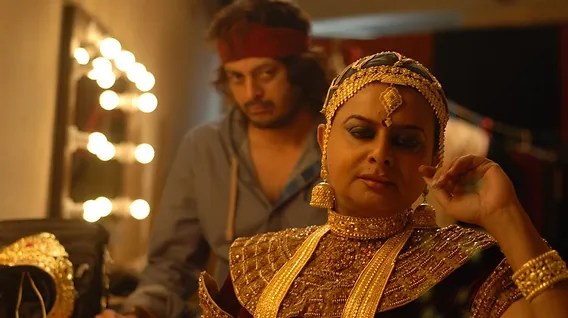
The camera lingers on the surgical scars, not as markers of completion, but as testaments to the violence inherent in society’s demand for categorization. Here, Ghosh subverts Tagore’s original text, which upheld transcendental love as a unifying force, instead positing the body itself as a battleground where identity is both constructed and contested.
This interrogation of performativity finds its intellectual counterpart in The Last Lear, a film ostensibly about the clash between theatrical and cinematic arts but ultimately a meditation on the fragility of identity itself. The aging Shakespearean actor Harish Mishra (Amitabh Bachchan), who clings to the sanctity of the proscenium arch, mirrors Ghosh’s own fraught relationship with the conventions of mainstream cinema. Mishra’s disdain for the “artificiality” of film—its fragmentation of performance into takes and retakes—becomes an allegory for society’s discomfort with fluid identities that resist easy capture.
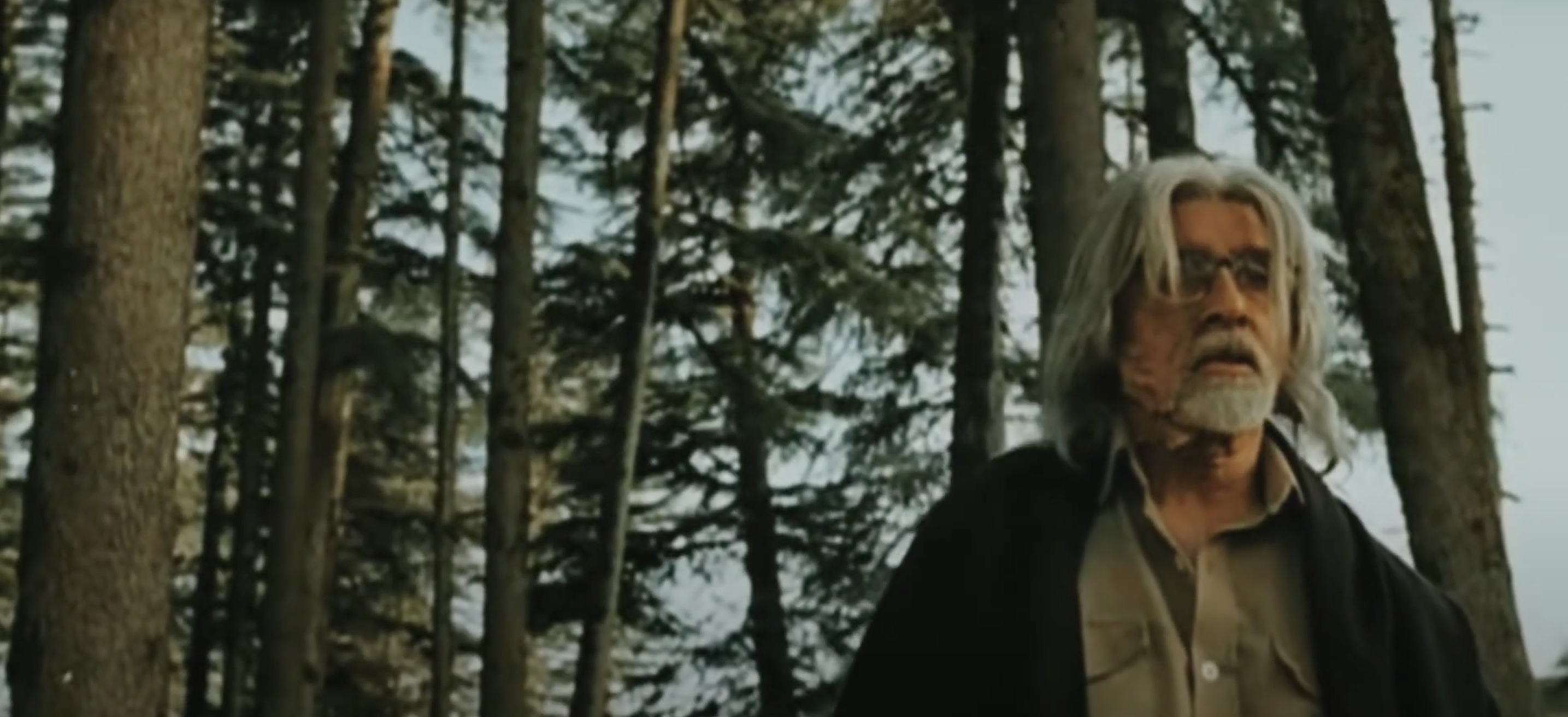
In one haunting scene, Mishra recites Lear’s madness soliloquy while wandering through a fog-drenched forest, his voice oscillating between grandeur and vulnerability. The sequence, shot in a single unbroken take, becomes a meta-commentary on Ghosh’s own artistic ethos: a rejection of the edited, sanitized self that society demands, in favor of raw, uninterrupted truth.
The forest, a recurrent motif in Shakespearean tragedy, transforms into a liminal space where the boundaries between actor and character, masculinity and fragility, dissolve—a visual echo of the queer liminality Ghosh explored elsewhere.
What distinguishes Ghosh from contemporaries who merely depicted queer lives is his insistence on situating gender nonconformity within specific cultural and historical matrices. His characters are not abstract symbols of resistance but products of Bengal’s contradictory modernity, where colonial-era Victorian morality collides with post-liberalization individualism.
In Chitrangada, Rudra’s upper-class milieu—all tasteful interiors and intellectual soirées—serves as both sanctuary and prison. The bourgeois drawing room, a recurring space in Ghosh’s films, becomes a microcosm of the Indian middle class’s schizophrenic relationship with tradition and progress.
When Rudra’s partner questions the necessity of surgery—“Why can’t we just be as we are?”—the question reverberates beyond the personal, indicting a society that tolerates queerness only when it remains invisible, unthreatening, and devoid of corporeal reality. Ghosh’s answer, articulated through the protagonist’s defiant metamorphosis, is that authenticity demands materiality; one cannot simply “perform” androgyny when the body itself remains a site of disciplinary control.
This tension between visibility and erasure permeates Ghosh’s later works, which increasingly blurred the line between filmmaker and subject. His public persona—marked by androgynous fashion, candid interviews about his sexuality, and a deliberate queering of traditional Bengali aesthetics—transformed him into what scholars term a “queer star”.
This was no mere publicity stunt but a calculated dismantling of the auteur-as-disembodied-artist myth. By inserting himself into his narratives, both literally (as in Chitrangada) and metaphorically, Ghosh forced audiences to confront the embodied reality of queer existence. His cinema became a form of embodied theory, where the personal and political fused in ways that academic discourse alone could never achieve.
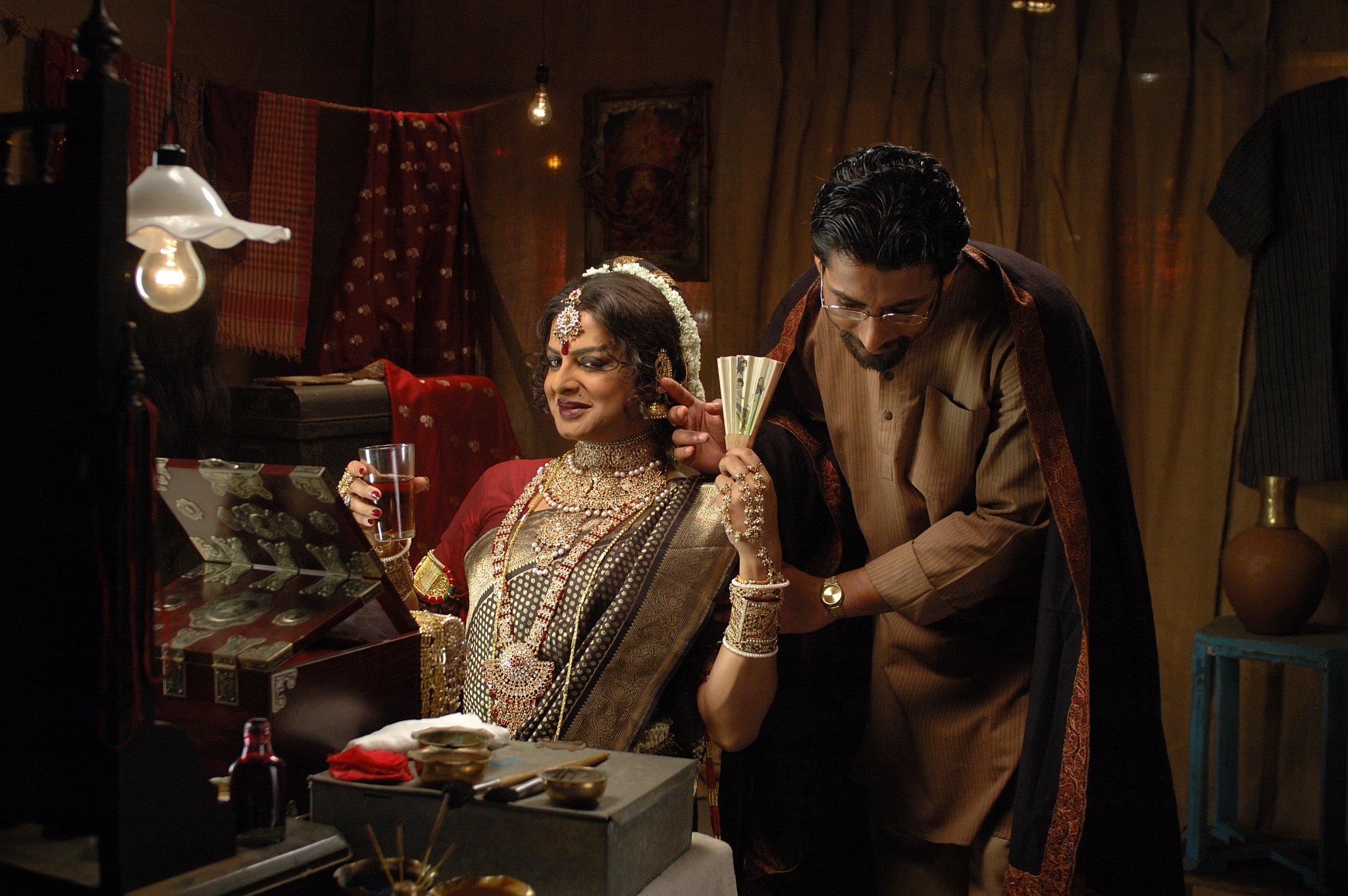
Yet Ghosh’s project was not without its paradoxes. His films, while groundbreaking, remained largely confined to the urban bourgeoisie, raising questions about whose queerness gets to be represented. As noted in critiques of his Arekti Premer Golpo (2010), Ghosh’s vision of gender fluidity often leaned on narratives of bourgeois self-actualization, inadvertently marginalizing working-class and Dalit queer communities whose struggles against systemic violence remained absent from his frames.
This tension—between radical content and elitist form—mirrors broader debates within Indian queer movements about the limits of representation as a tool for liberation. Ghosh seemed aware of this contradiction; in interviews, he acknowledged Tagore’s influence as both inspiration and burden, a reminder that even revolutionary art is constrained by the cultural capital of its creator.
Philosophically, Ghosh’s work resonates with what Michel Foucault termed “technologies of the self”—the practices through which individuals transform themselves to achieve authenticity. However, in Ghosh’s universe, this transformation is never solitary. It is invariably mediated by the gaze of others, be it the lover’s ambivalent acceptance in Chitrangada or the filmmaker’s exploitative lens in The Last Lear.
The latter film’s tragic climax, where Mishra’s final performance leaves him physically broken, serves as a cautionary tale about the cost of living authentically in a world that commodifies identity. Mishra’s broken body, sprawled on the film set, becomes a metaphor for the violence inflicted upon those who dare to exist outside normative frameworks—a violence both physical and epistemic.
Ultimately, Ghosh’s cinema defies easy categorization. It is neither fully radical nor comfortably assimilative, existing instead in the interstices where art and identity collide. His films do not offer resolutions but provocations, refusing to let either characters or audiences rest in the certainty of fixed meanings. Through his unflinching gaze, the private struggles of queer individuals are transmuted into universal inquiries about what it means to be human in a world obsessed with categorization.
In this sense, Ghosh’s legacy transcends regional cinema; he becomes part of a global discourse on the politics of visibility, the ethics of representation, and the endless human quest for self-definition. To watch his films today is to participate in a conversation that remains urgent, a reminder that the battle for authenticity is not merely personal but profoundly collective—a dance of shadows and light that continues long after the screen fades to black.
Films mentioned in the article and where to watch them –
- Arekti Premer Golpo: Internet Archive – LINK
 ARTMO MAG
Leave a comment