
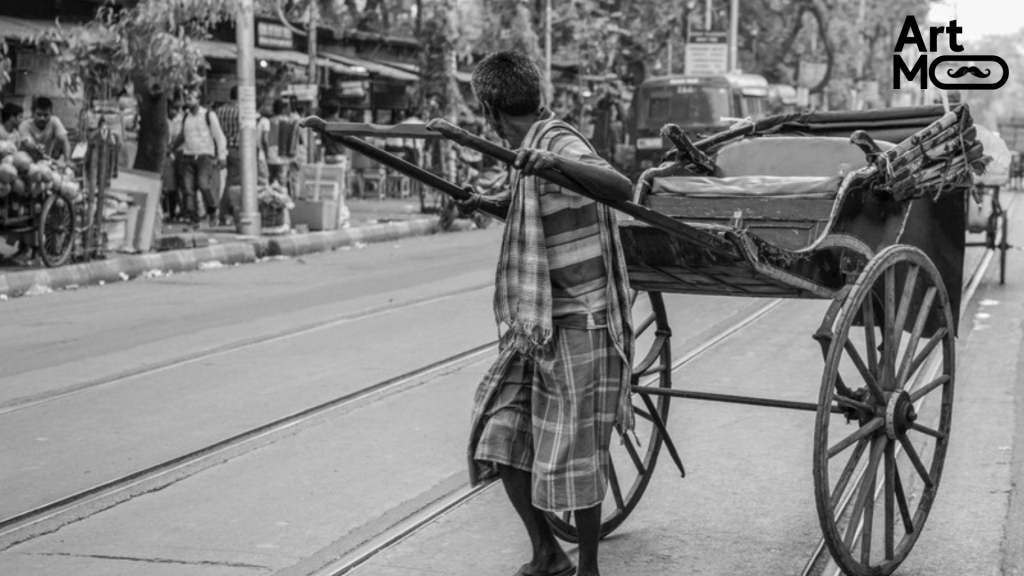
In a city where the past doesn’t politely exit when the future arrives but instead pulls up a chair, lights a bidi, and starts arguing dialectics, Kolkata’s hand-pulled rickshaws persist like a stubborn counterpoint to the symphony of progress.
Picture this: a contraption of bamboo and rattan, older than the lightbulb, trundling past a billboard for cryptocurrency, its puller—a man with calves like knotted rope—outpacing a delivery truck stuck in congestion. This is not a scene from magical realism but a daily reality in a metropolis that treats obsolescence as a personal insult.
To understand why these human-drawn antiques still clatter across North Kolkata’s para lanes is to grapple with a paradox: How does a city renowned for its intellectual fervor, a place where street debates about Marx and Tagore can delay traffic, justify a practice that appears, at first glance, to defy every principle of human dignity it claims to champion?
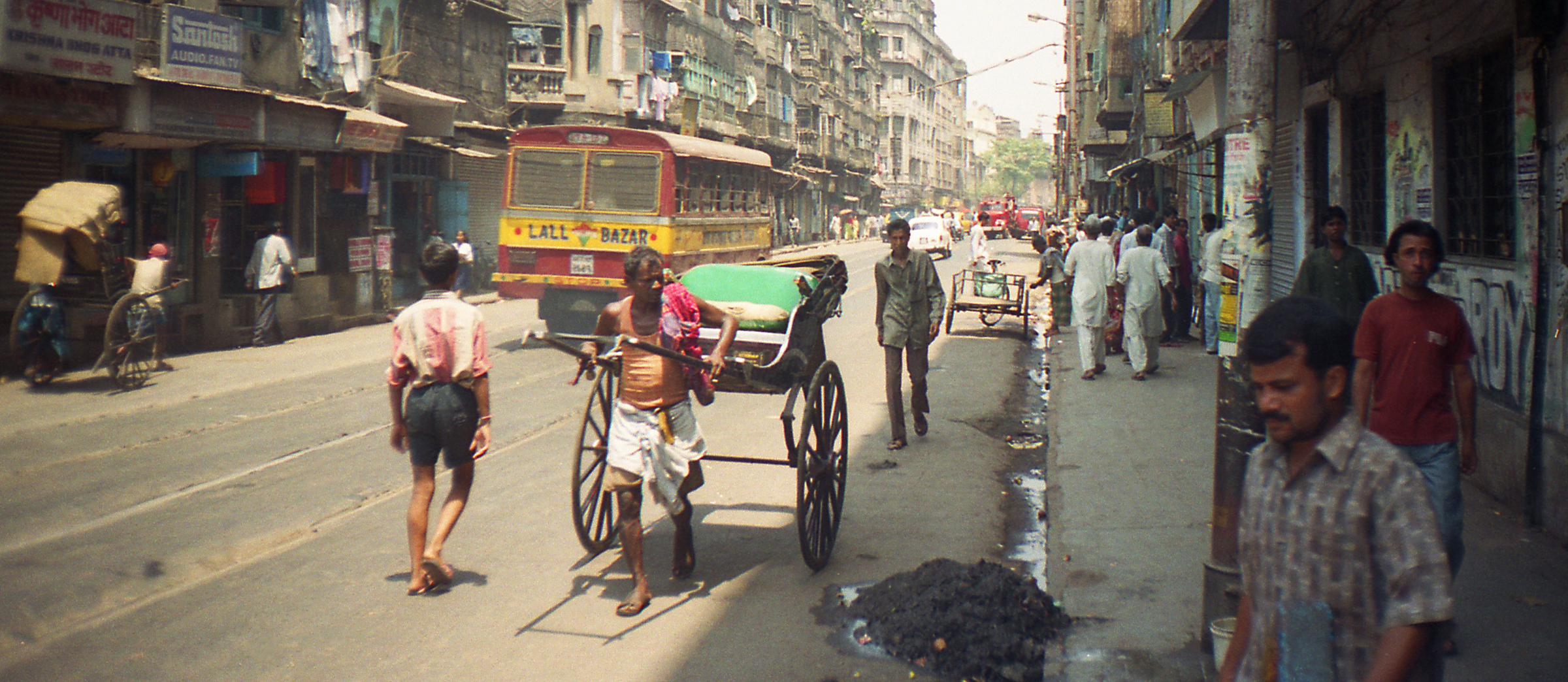
The rickshaw’s origin story reads like a geopolitical farce. Introduced from Japan in the late 19th century—a time when Kolkata was busy being the Empire’s second city and the world’s jute warehouse—these “man-powered hackney carriages” quickly became the preferred ride for colonials who found palanquins too démodé and horses too high-maintenance.
By the 1890s, the city had more rickshaws than streetlamps, their pullers forming one of India’s first urban proletariats. Fast-forward to 2025, and while Tokyo’s rickshaws have been rebranded as boutique tourist attractions (complete with Instagram-friendly happi coats), Kolkata’s version remains stubbornly utilitarian.
The Communist Party, which ruled West Bengal for 34 years with the zeal of a strict headmaster, once vowed to abolish them. When the High Court ordered a ban in 2006, the state’s Left Front government—in a move that would give Engels indigestion—refused to comply, tacitly admitting that some contradictions can’t be resolved by manifesto alone .
Beneath the ideological hand-wringing lies a merciless economic calculus. For the pullers—largely migrants from Bihar, Jharkhand, and Odisha, where droughts and landlessness turn human bodies into the last viable currency—the rickshaw offers a rare asset: autonomy. No Uber algorithm dictates their fares; no traffic police fines them for navigating alleys narrower than a bureaucrat’s imagination.
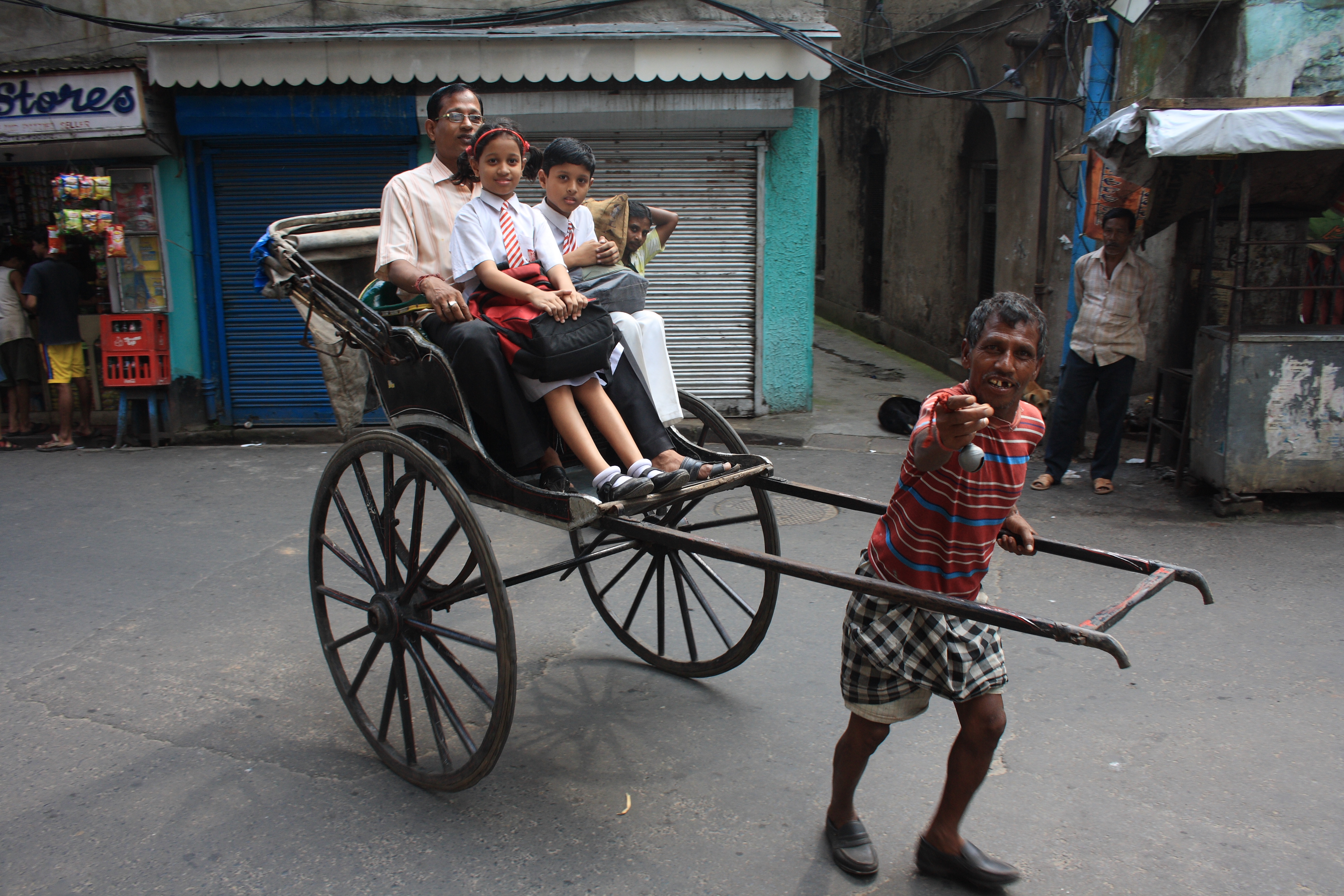
Culturally, the rickshaw has embedded itself into Kolkata’s identity with the tenacity of kosha mangsho stains on a white kurta. Consider the annual Durga Pujo rush, when the city’s arteries clog like overfed sewers. While SUVs sit gridlocked, rickshaws glide through gaps with the precision of sari pleats, delivering tardy dhunuchi dancers and armloads of shankha bangles to pandals.
For Kolkata’s bhodrolok elites—who’ll debate privilege over cha at Coffee House but still hire pullers to ferry their arthritic mothers—the rickshaw exists in a moral blind spot, tolerated like a eccentric uncle who tells off-color jokes.
Yet to dismiss this as hypocrisy misses the deeper cultural negotiation at play. Kolkata is a city that venerates labor but romanticizes struggle, a place where even the chaiwallah quotes Neruda. The rickshaw puller, in this ecosystem, becomes both martyr and everyman—a figure immortalized in Ritwik Ghatak’s films and Mahasweta Devi’s stories, yet invisible in plain sight.
The rickshaw’s detractors—NGOs, urban planners, and that one uncle who returns from Canada insisting Kolkata needs “a good subway system”—argue that modernization is inevitable. But Kolkata has always treated inevitability as a challenge. After all, this is the city where electric tram tracks laid in 1902 still share road space with BMWs, where hand-written pujo invitations coexist with QR codes.
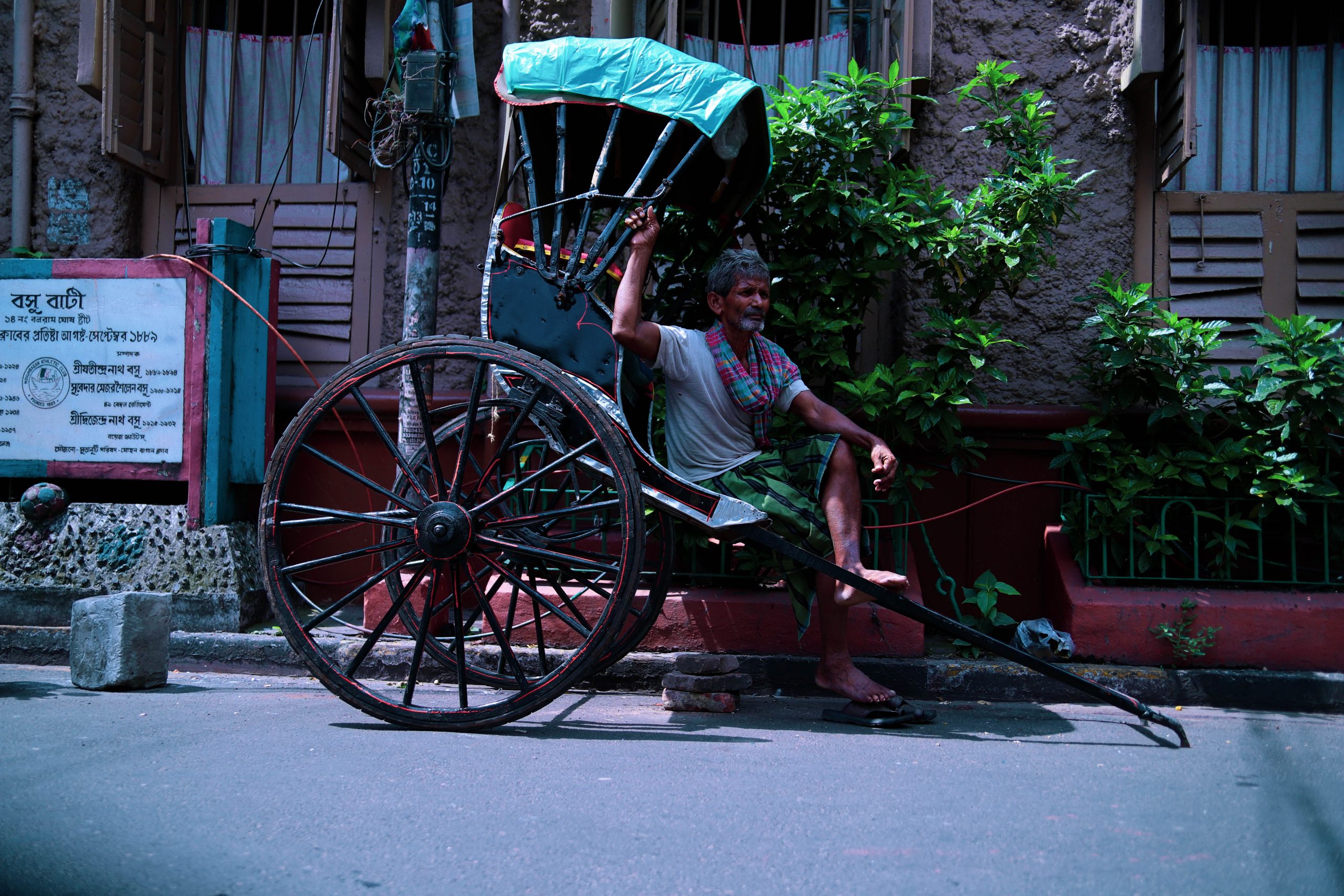
Intriguingly, the government’s 2017 proposal to replace pullers with electric “e-rickshaws” flopped spectacularly when drivers discovered Bengal’s legendary humidity wreaked havoc on lithium batteries.
Meanwhile, the pullers themselves, far from being passive victims, have adapted with guerrilla ingenuity. Many now accept QR payments via phones tucked into their gamchas, and during the 2020 lockdown, some transformed their rickshaws into mobile vegetable stalls—a feat of pandemic pivoting that would make Silicon Valley blush.
The hand-pulled rickshaw thrives because Kolkata understands a truth that efficiency-obsessed cities often forget: utility and anachronism are not sworn enemies. The rickshaw is both a lifeline for octogenarians navigating potholed lanes and a living critique of a world that mistakes speed for progress.
And so, the rickshaws roll on, their wheels tracing the city’s uneasy conscience, their rhythm a reminder that some stories resist neat endings—especially in a place where even the sidewalks have opinions.
 ARTMO MAG
Leave a comment