
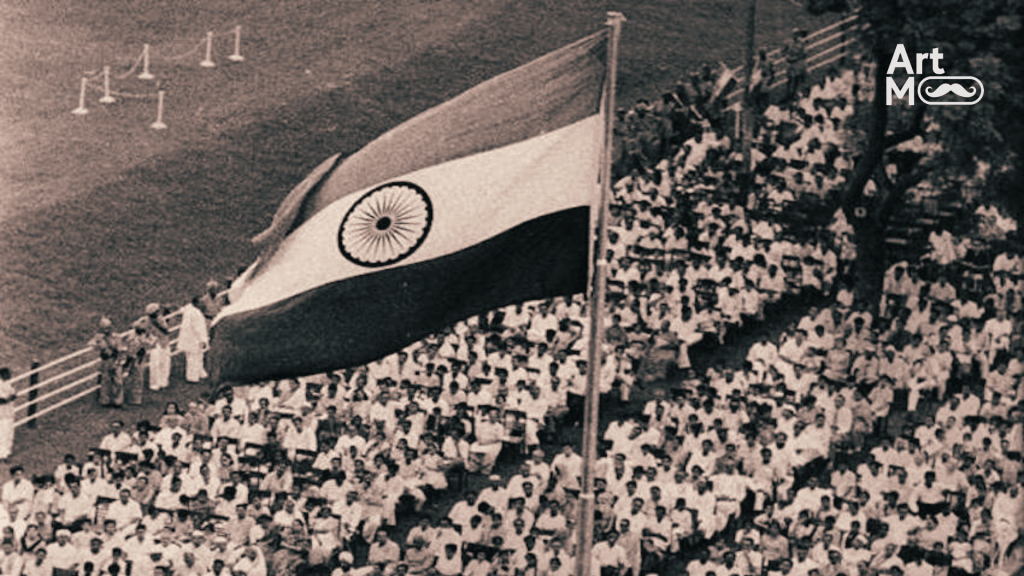
It was a typical cold winter morning on December 10, 1946 in Delhi. The city jerked awake with an unusual level of activeness and waltzed through the day with an infectious wave of positive hope. The reason behind the energy in the air was that it was the first day of business for the Constituent Assembly of India — the body that was to frame the Constitution of India.
It was the first official showing that independence from British rule was not a false promise. Every man, woman, and child across the country looked to Delhi and the 389 members of the assembly with high expectations. The words that were to be spoken within the walls of the parliament would be the ones that determined their fate for decades, centuries, or more to come, long after the colonists left the shores.
The united frustration with the British had been the glue that stuck politicians and people from different parts of the country together. They’d fought and revolted together alongside each other, fuelled by this frustration. That day, it did not take long for the glue to give up its hold. R.V. Dhulekar of the United Provinces (Present day Uttar Pradesh and Uttarakhand) moved an amendment, speaking in Hindustani.
The chairman of the assembly, Dr Sachchidananda Sinha, interrupted and reminded him that many members did not speak or understand the language. He said, “People who do not know Hindustani have no right to stay in India. People who are present in this House to fashion a Constitution for India and do not know Hindustani are not worthy to be members of this Assembly. They had better leave.”
And just like that, he alienated every freedom fighter who spoke Tamil, Bengali, Malayalam, or Kannada from the rewards that their struggles were due. More than 78 years since that day, there are still many proponents for the argument that those who refuse to prioritise the language of Delhi over English or even their native tongue are not worthy of being included in the order of India.
The NEP 2020 that is stirring up quite the dramatic narrative currently is the latest development in this never-ending saga. The central government argues what harm can a child incur by learning an additional Indian language. The doubtful eyes of the non-Hindi speaking states are adamant that this “additional” language will most definitely be Hindi or Sanskrit. This permanent suspicion can be attributed to the rather open declaration of intent by politicians like R.V. Dhulekar.
The two contrasts of a language-driven India
Forget politics and look at this from the perspective of two common men in India. The first resides in the Northern part of the country and he cannot comprehend why an Indian would choose to speak English, the language that carries the stench of brutal colonialism, over a language that was conceived and born in India. Over a language that the majority of the country speaks.
After all, the merits of conversing in a common language do not need to be highlighted. It would make governance, logistics, and economic growth incredibly easy. It would also create a stronger bond of national unity. Logic transcends into an emotional realm when the concept of religion is brought into the mix. The idea of a united Hindustan bowing its head to Hinduism and speaking Hindi, a language derived from Sanskrit – the language of the gods – is a dream that can make millions shed tears.
The second resides in a Southern state. He speaks a language that carries no resemblance to the one spoken by his counterpart. Although his deities have been categorized under the label of Hinduism (a religion that promotes ahimsa) by the men of god, he still sacrifices goats and buffaloes as a tribute to them. He wants to learn English because his dreams cross oceans towards the farthest and most advanced corners of the globe and not towards New Delhi or Mumbai.
What he wouldn’t be able to comprehend is why he must learn another Indian language when the Lingua Franca is available to him. There is a reason why the argument that English is a “foreign” language doesn’t strike an emotion in him. It’s because Hindi, Gujarati, Bengali or any other language spoken outside of his region is as foreign to him as English is.
One would just have to go back a thousand years and see how fond and welcoming his forefathers were of a language other than their own. Today’s purpose and requirement is all he cares about. If Chinese were to become Lingua Franca in the future, he wouldn’t hesitate to learn it. The same applies to Hindi. He doesn’t see the need to practice and protect a culture or a language that his ancestors did not bestow on him.
So, is the one in the North wrong for wanting to be done with the English that tormented him and his ancestors for centuries? Or is the one in the South wrong for wanting to learn only the more useful of the foreign languages that are in front of him? Even the most brilliant minds in international diplomacy cannot settle this.
A strong and firm understanding of these stark differences by certain members of the Constituent Assembly is what led to a compromise proposed by members K.M. Munshi and Dr. NG Ayyangar in 1950. The threat of separation under the name of Dravida Nadu surely must have helped as well.
The ultimatum that T.T. Krishnamachari of Madras put in front of the assembly cannot be overseen when bringing up this now-defunct separatist idea. He said, “I would, Sir, convey a warning on behalf of people of the South for the reason that there are already elements in South India who want separation…., and my honourable friends in U. P. do not help us in any way by flogging their idea [of] “Hindi Imperialism” to the maximum extent possible.”
“Sir, it is up to my friends in U. P. to have a whole-India; it is up to them to have a Hindi-India. The choice is theirs.”
It is rather jarring to read these words. India broken into pieces is the worst nightmare a youngster can have today. It was also the last thing the proponents of Hindi wanted back in the day. And so, English was allowed to be an official language alongside Hindi for a period of 15 years from the commencement of the constitution in 1950. The power to extend this deadline was given to the Parliament.
Why the war for linguistic freedom has been a need since
The years that flowed since January 26, 1950 were filled with tension. The State Reorganisation Act of 1956 segregated states on the basis of the language spoken. In 1962, just when the deadline was about to end, Jawaharlal Nehru declared secessionism as an illegal act. In 1963, the Dravida Munnetra Kazhagam (DMK) – the most severe proponent of Dravida Nadu from Tamil Nadu – redacted its demand.
However, that’s as far as the party was willing to go. The Government of India, under Lal Bahadur Shastri, tried forcing Hindi to be the sole official language of the country when the 15-year period was about to lapse. This move was vehemently opposed by the states in the South. To say riots broke out would be grossly understating the political renaissance that followed.
DMK, at the time, was a party led by C.N. Annadurai and carried largely by college students. It was the movement that this group activated that led to protests in Tamil Nadu and in the neighbouring states of Karnataka and Andhra Pradesh. Shook by the backlash, Shastri announced in the All India Radio on February 11, 1965 that English would continue to be an official language alongside Hindi.
Needless to say, the pro-Hindi activists in Northern India did not love him for giving up ground. English signages all across Delhi were blackened with tar by members of the Jan Sangh, a Hindutva political party, in protest. Jubilation reigned elsewhere.
As an inevitable result of the victory, DMK was elected as the ruling party of the state in 1967 against the formidable Congress.
Soon enough in 1968, the Official Languages Act of 1967 was amended to include English as an official language of India alongside Hindi for an indefinite period of time. The south’s war for linguistic freedom was won and the victory has stayed since to a certain degree. But there has been a need to maintain it in pristine form through constant resistance and revolts. Why? Babasaheb has the answer.
He said in one of his speeches, “One language can unite people. Two languages are sure to divide people. This is an inexorable law. Culture is conserved by language. Since Indians wish to unite and develop a common culture, it is a bounden duty of all Indians to own up Hindi as their official language.”
The loss or reduced usage of many local tongues in the North is hidden in plain sight today. The acceptance of Hindi as a simpler, sensible, and respectable alternative is the reason for this. Along with the eradication of the languages, cultures have vanished too. India WILL become a Hindi-speaking country in time if the resistance is not maintained.
What that means, by the idea of Babasaheb, is that all the ancient cultures that we take so much pride in will be forgotten and left in the dust. The echoing chants of Buddhist monks, the excavations in Adichanallur, the ploughed fields of Kalibangan and every other piece of history that existed on this fraction of land will be brought under a giant umbrella and their true stories will be systematically erased.
This is where the fair and sensible argument of the common man in North India becomes obsolete. His want to delete the Englishness of India means a million other native Indian elements could also be deleted in time. For the common man in South India, freedom could once again become a dream. Only, the one with the reins will say the name of Ram instead of Christ.
Fortunately, the power brokers in Delhi have time and time again been forced to acknowledge the diversity of the country thus far. That acknowledgement is what fosters a sense of unity, which respects diversity. But how long can this last? The freedom fight against the British is what instilled a sense of nationalism across India.
The fear is that this emotion will be increasingly forgotten with time and all that will be left is a country always at odds with itself internally. Hundred years from now, what will it be that preserves and binds all these cultures, languages, and religions together under the banner of India? A wavering heart is what remains at the wake of this question.
 ARTMO MAG
Leave a comment