

India, that grand mosaic of pluralistic compulsions, is as much a cartographic concept as it is a relentless overflow of creative instinct.
While Madhubani and Warli have found their place on everything from tote bags to tattoo sleeves, other, more obscure folk traditions lie buried under dust—of both time and apathy.
It is these seven lesser-known art forms we now exhume, not with the brute force of rediscovery, but with the reverence of an archivist unlocking the memory of a civilization too distracted by NFTs and digital art.
Let us proceed—kettle of Darjeeling first flush in hand.
1. Paitkar (Jharkhand)

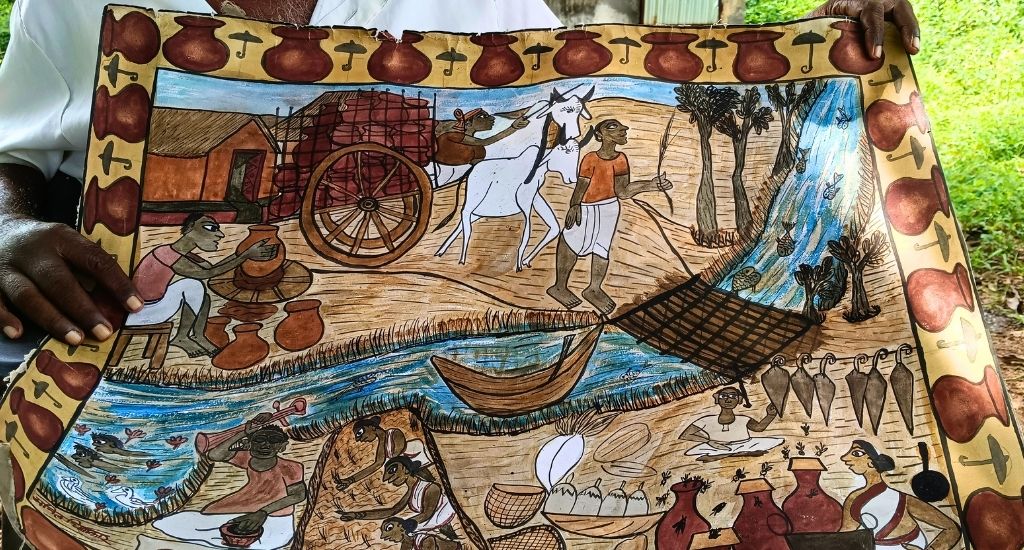
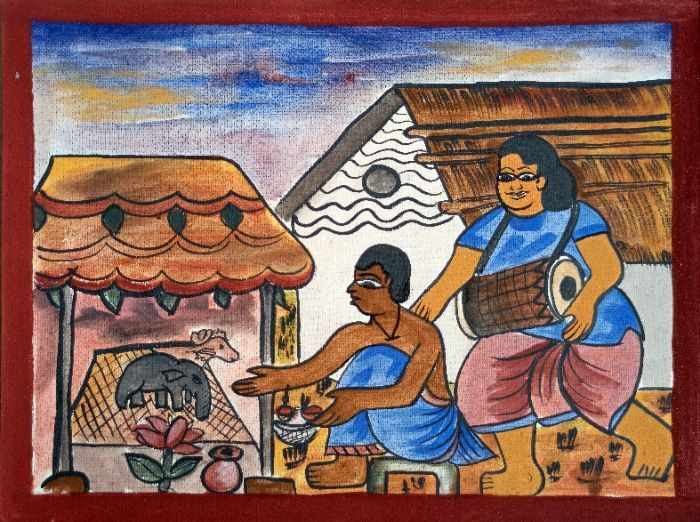
Where: East Singhbhum, Dumka
Medium: Natural pigments on palm leaves or paper
Why it matters:
Known as the “scroll paintings of Jharkhand,” Paitkar predates the state’s own political birth. Painted by the Chitrakarcommunity, these scrolls served as didactic tools: itinerant bards would unfurl each narrative panel-by-panel, combining song and image to address themes of karma, death, and liberation.
One may call them Jharkhand’s answer to graphic novels—albeit less Marvel, more metaphysics.
2. Rogan Art (Gujarat)

Where: Nirona village, Kutch
Medium: Castor oil-based paint on fabric
Why it matters:
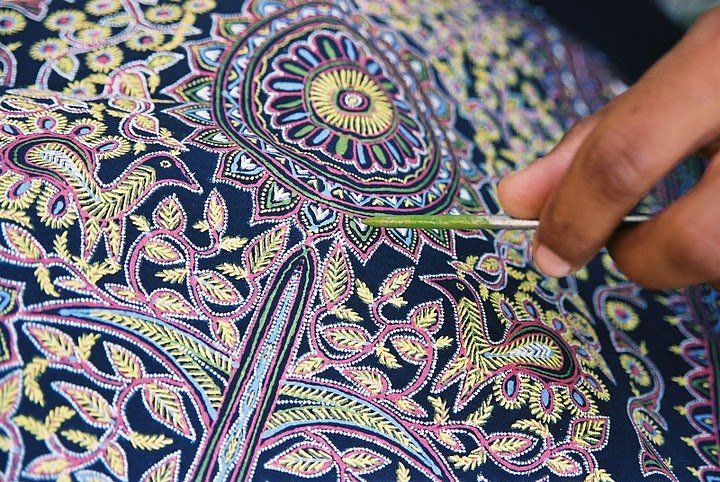
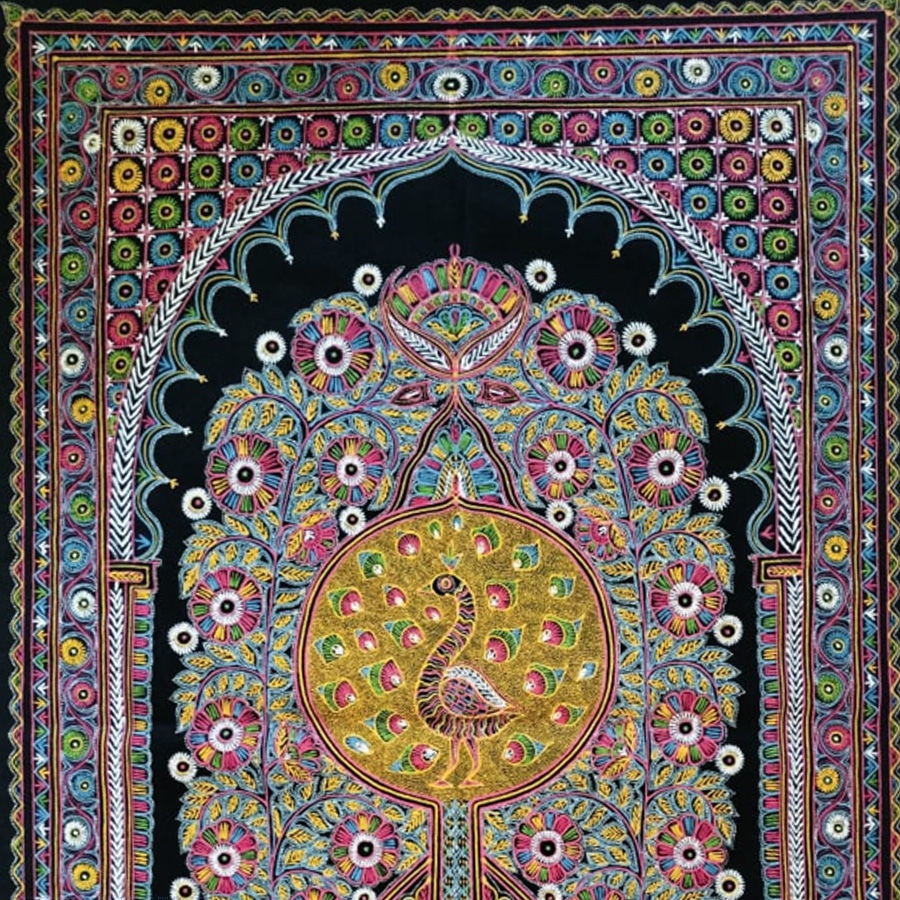
If you’ve never heard of Rogan art, blame geography—and possibly our education system. Practiced by a single Muslim family for centuries, Rogan involves painting with a needle, not a brush.
A stylus dances across fabric, laying down intricate symmetrical designs. Barack Obama once received a Rogan painting. If that doesn’t confer postcolonial legitimacy, I don’t know what does.
3. Bhil Art (Madhya Pradesh/Rajasthan)
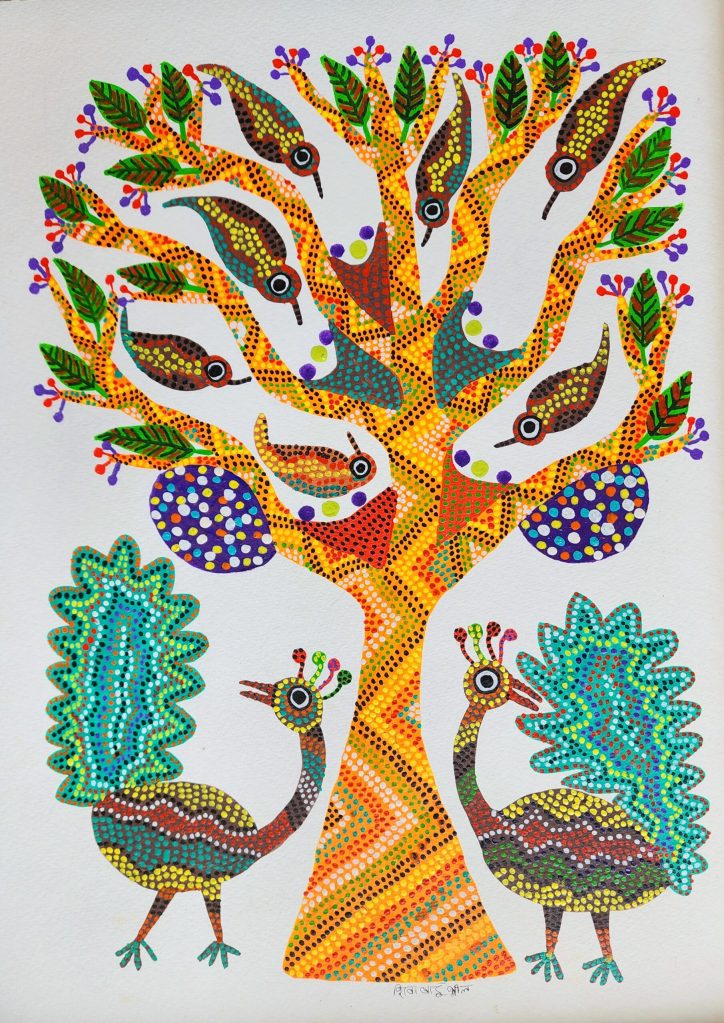
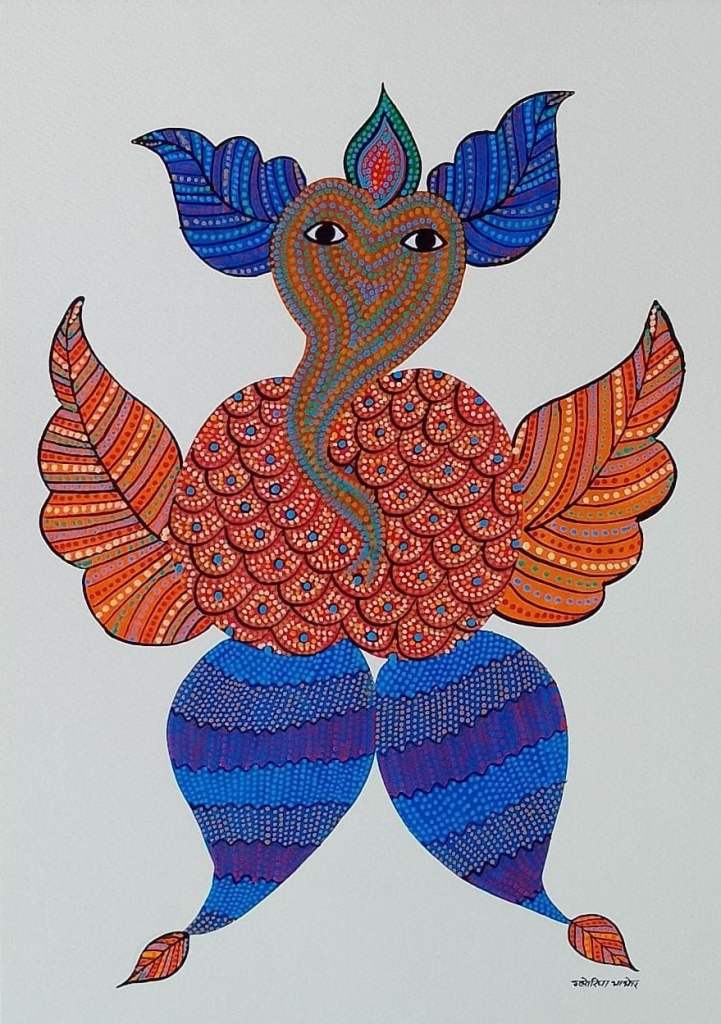
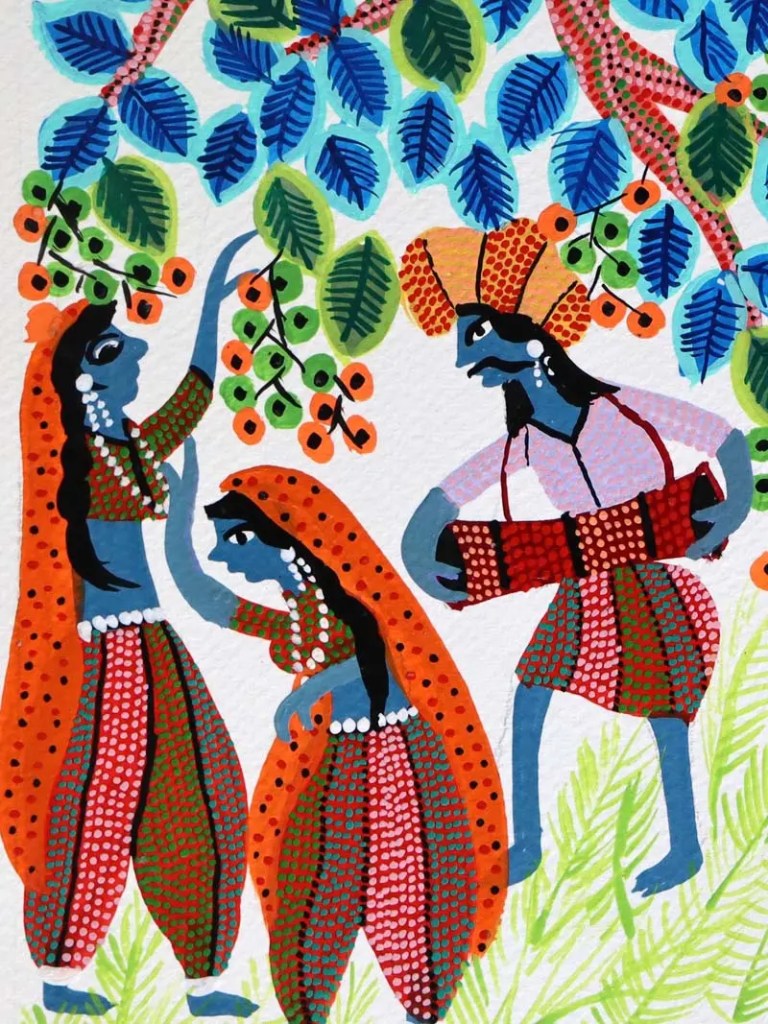
Where: Jhabua, Alirajpur
Medium: Dots and earthy pigments on walls or canvas
Why it matters:
The Bhils, one of India’s largest indigenous tribes, use art to encode memory. Dots—each one representing a deity, ancestor, or belief—are placed methodically.
You may call it “pointillism” if you’re feeling particularly Parisian, but don’t mistake this for modern abstraction. These dots breathe, chant, and remember. They are oral history turned visual—a collective consciousness of a forest-dwelling people.
4. Cheriyal Scroll Painting (Telangana)
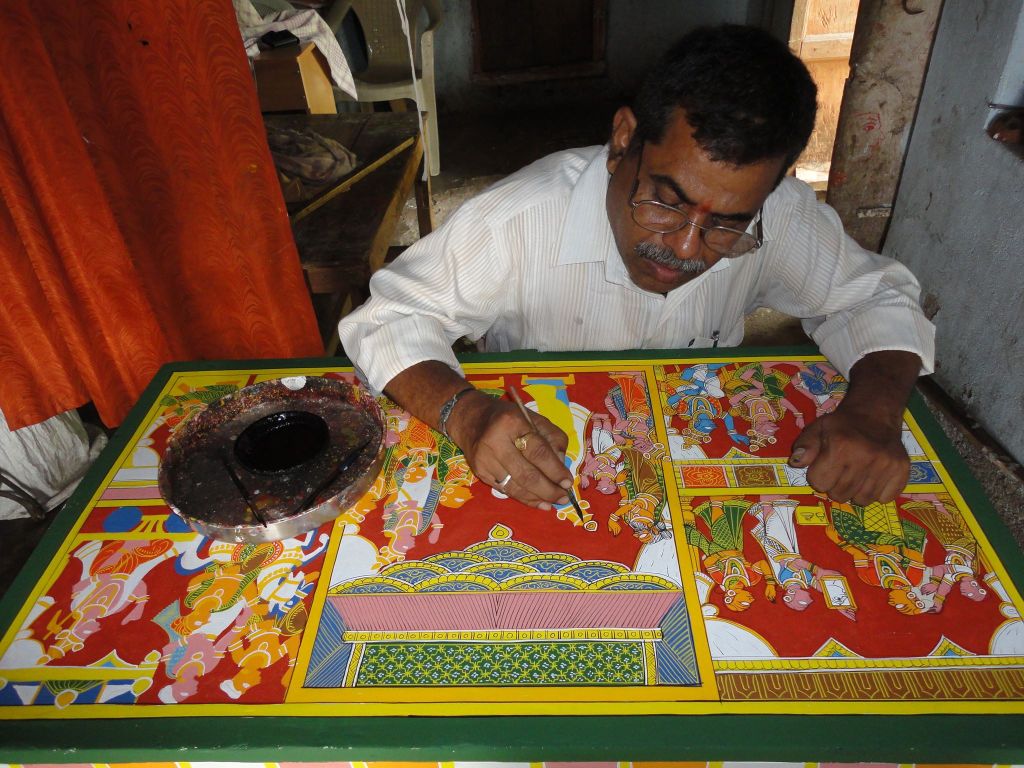
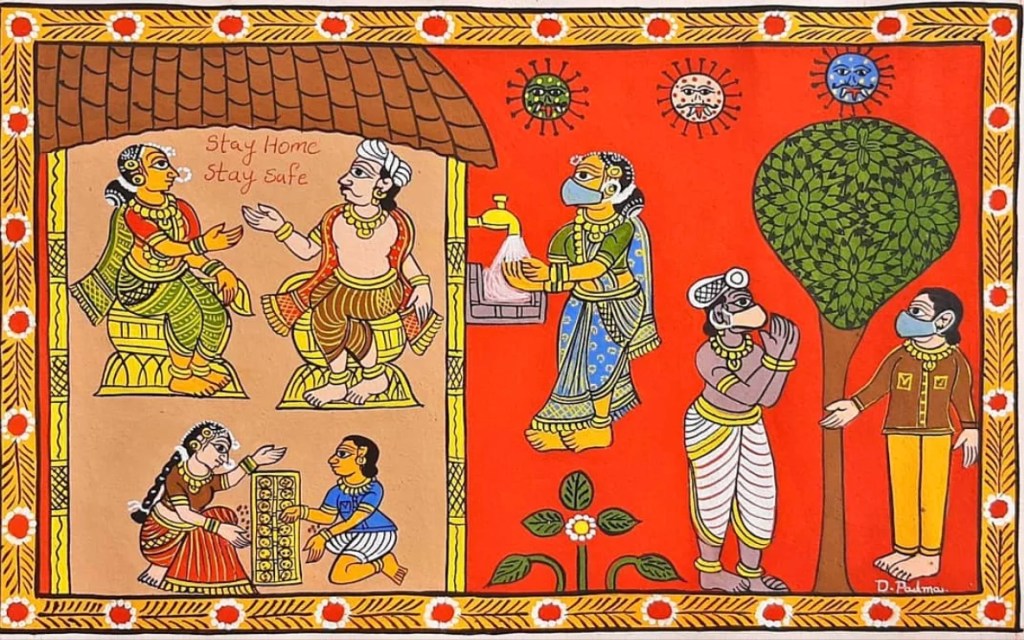
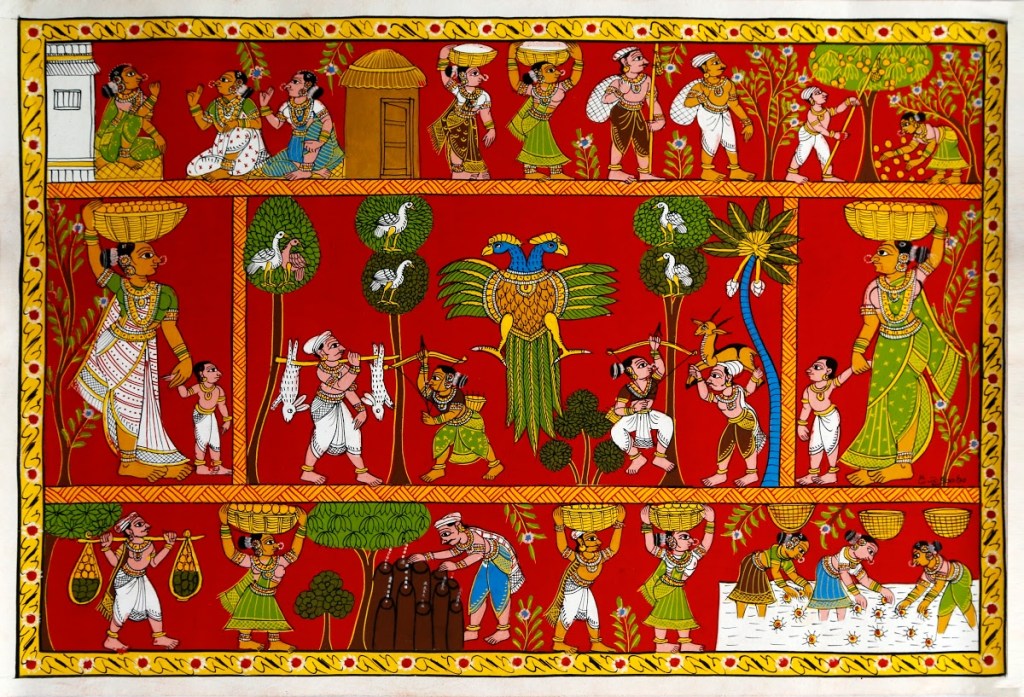
Where: Warangal, Hyderabad region
Medium: Hand-made canvas, natural dyes
Why it matters:
A Deccan parallel to Rajasthan’s Phad or Bengal’s Pat, Cheriyal scrolls encapsulate caste-specific mythologies—yes, caste. The Kaki Padagollu and Kamsali communities would perform these stories in a mix of painting, puppetry, and song.
Each scroll was tailored to a patron’s caste mythos—a bespoke theology, one might say. The scrolls are colorful, yes—but so is subaltern resistance.
5. Tikuli Art (Bihar)
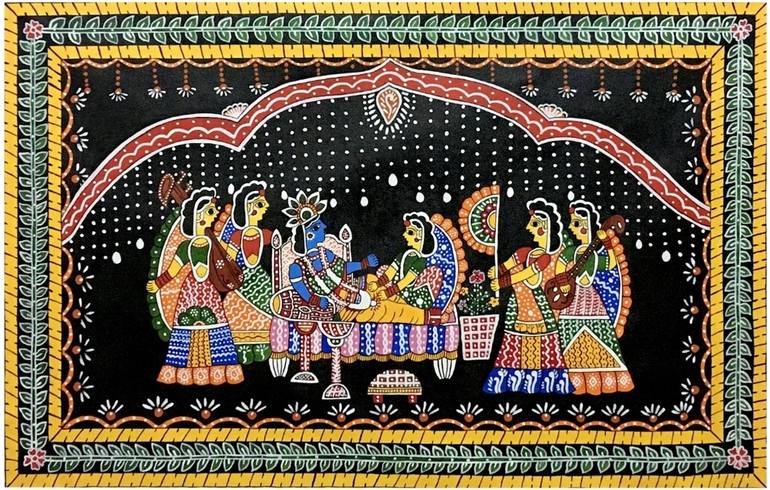
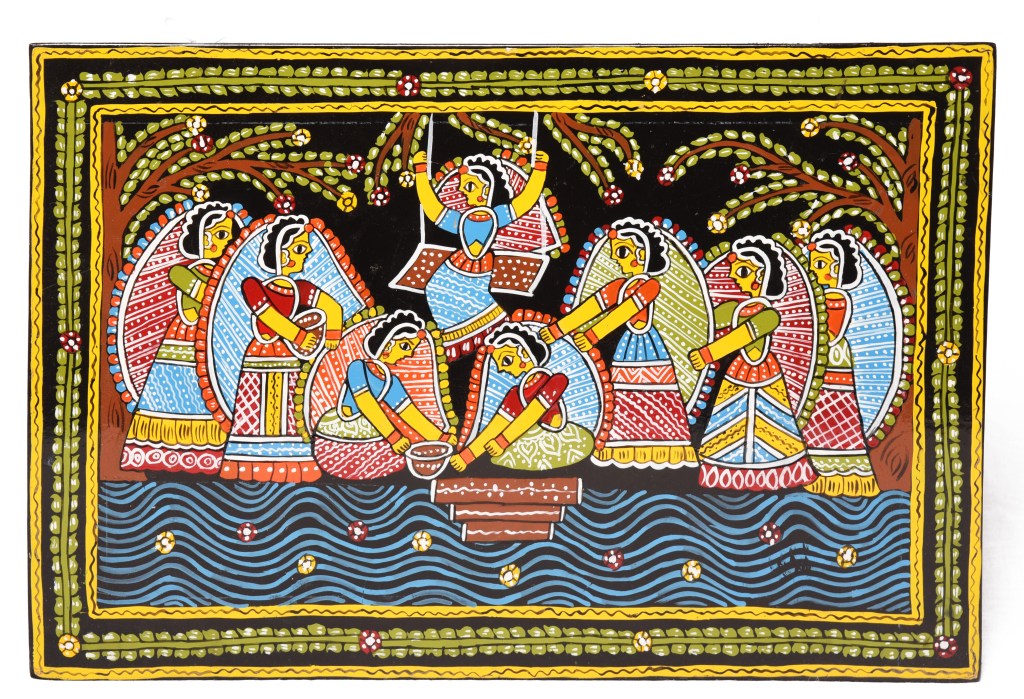
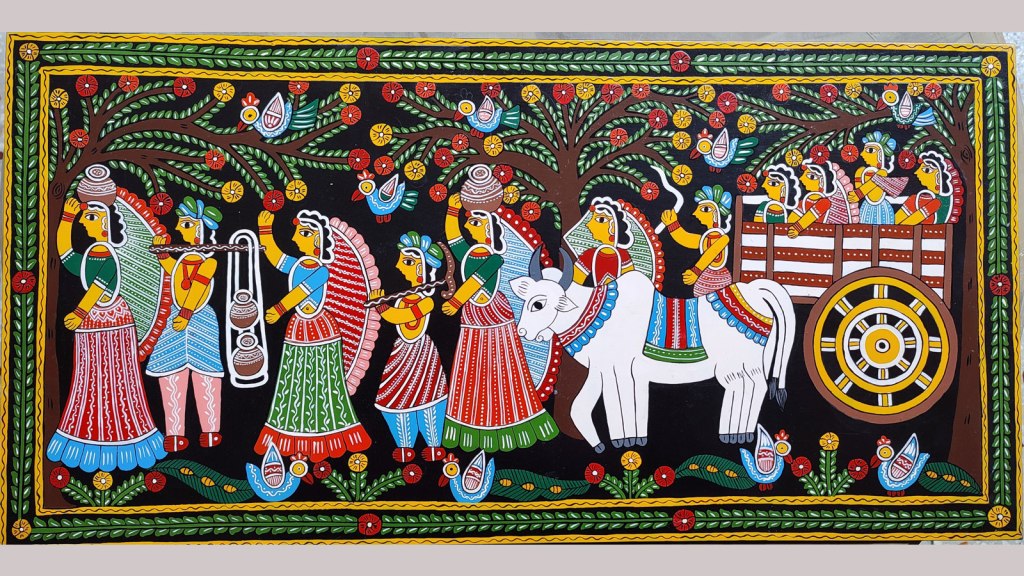
Where: Patna, Bihar
Medium: Enamel on hardboard, inspired by bindi designs
Why it matters:
If Mughal miniature art met industrial lacquer, the offspring might resemble Tikuli. With origins in Mughal-era Patna, Tikuli art adorned mirrors, furniture, and ceremonial items using powdered glass enamel.
Tikuli motifs may appear decorative, but they reflect a fusion of Indo-Islamic aesthetics with industrial-age experimentation. Bihar—always subversively modern.
6. Kaavi Art (Goa and Konkan)
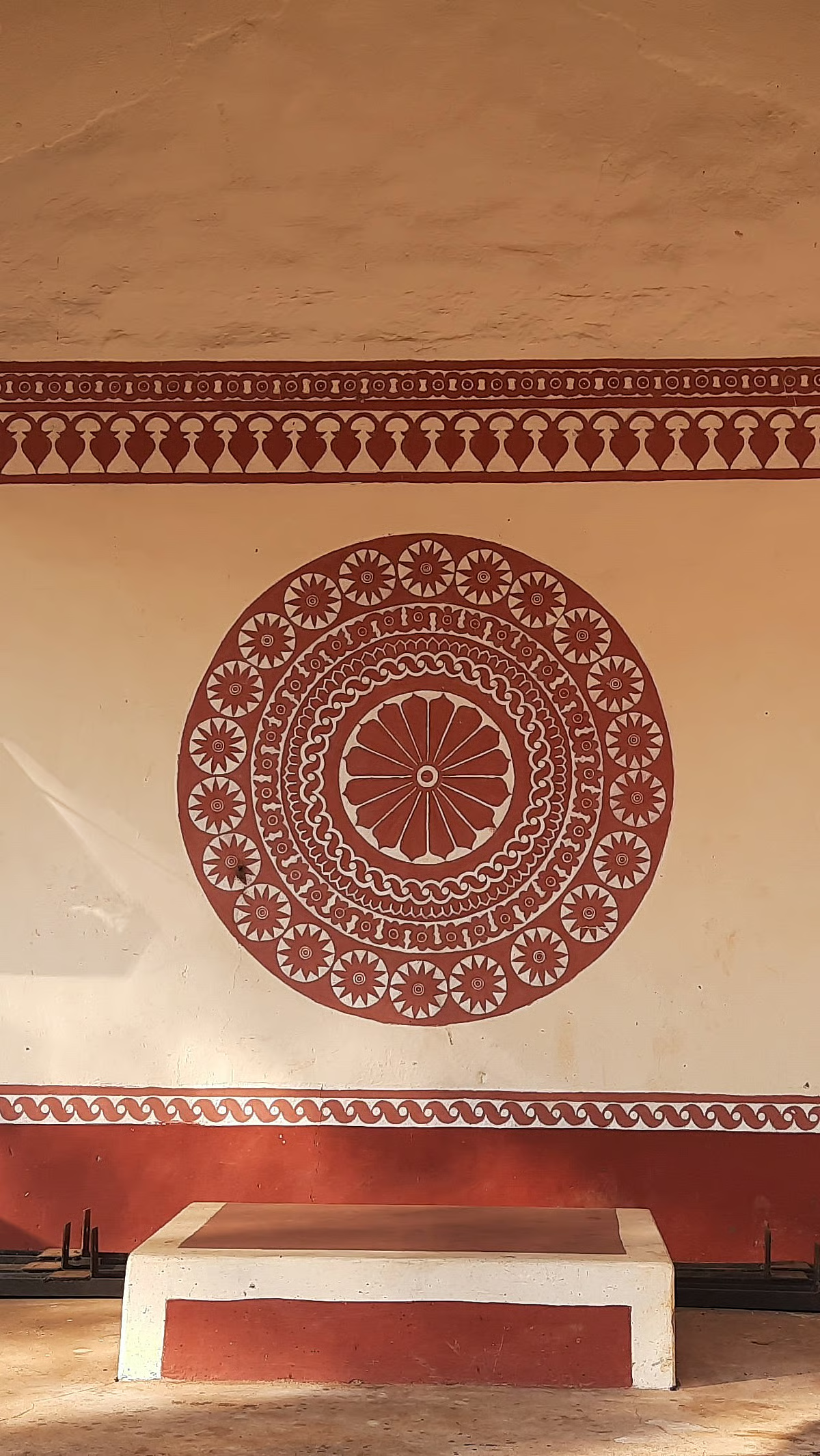
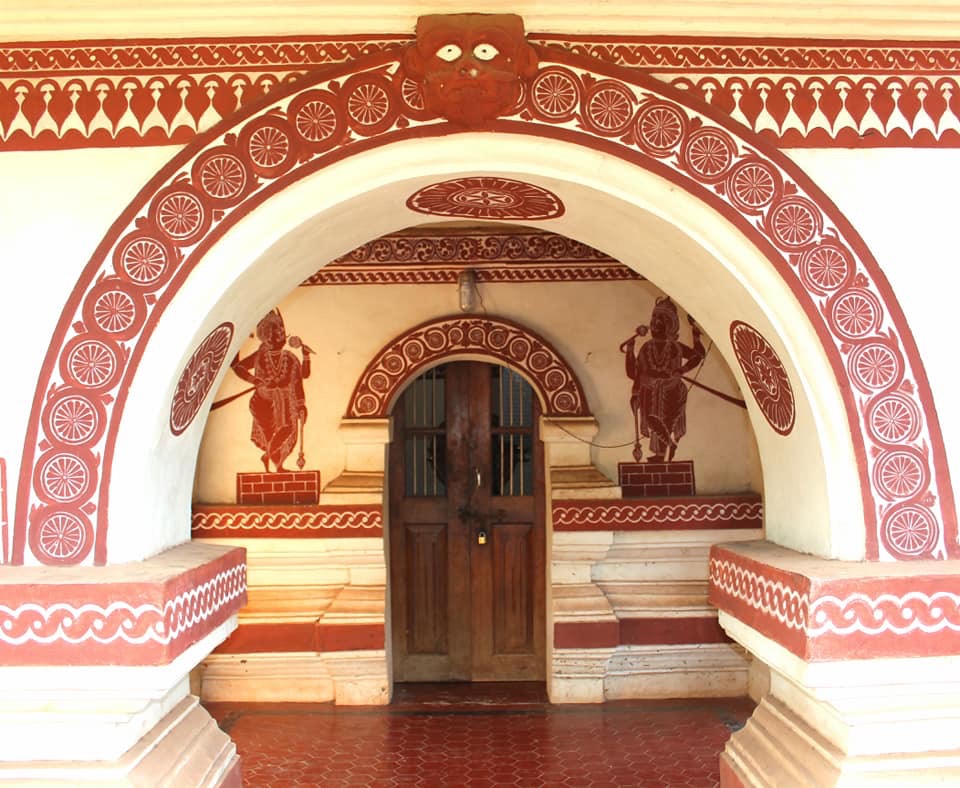
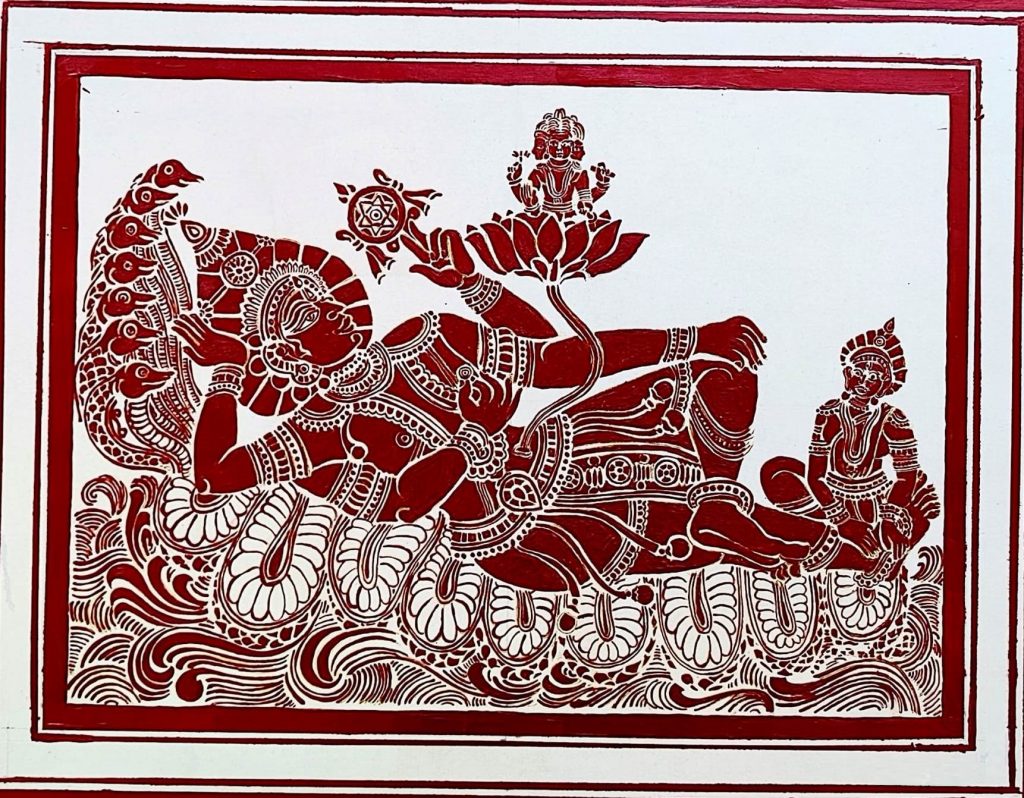
Where: Coastal temples of Goa and Sindhudurg
Medium: Red laterite pigment etched onto lime-plastered walls
Why it matters:
Kaavi is Goa’s only surviving mural art form. Using the local red earth (kaav), artisans etch divine motifs onto whitewashed temple walls—meticulous, devotional graffiti.
It is both rustic and refined: a tectonic plate where Vedic sensibilities meet Konkan craftsmanship. It thrives in silence, like a coconut tree contemplating Vedanta.
7. Sanjhi Art (Mathura, Uttar Pradesh)

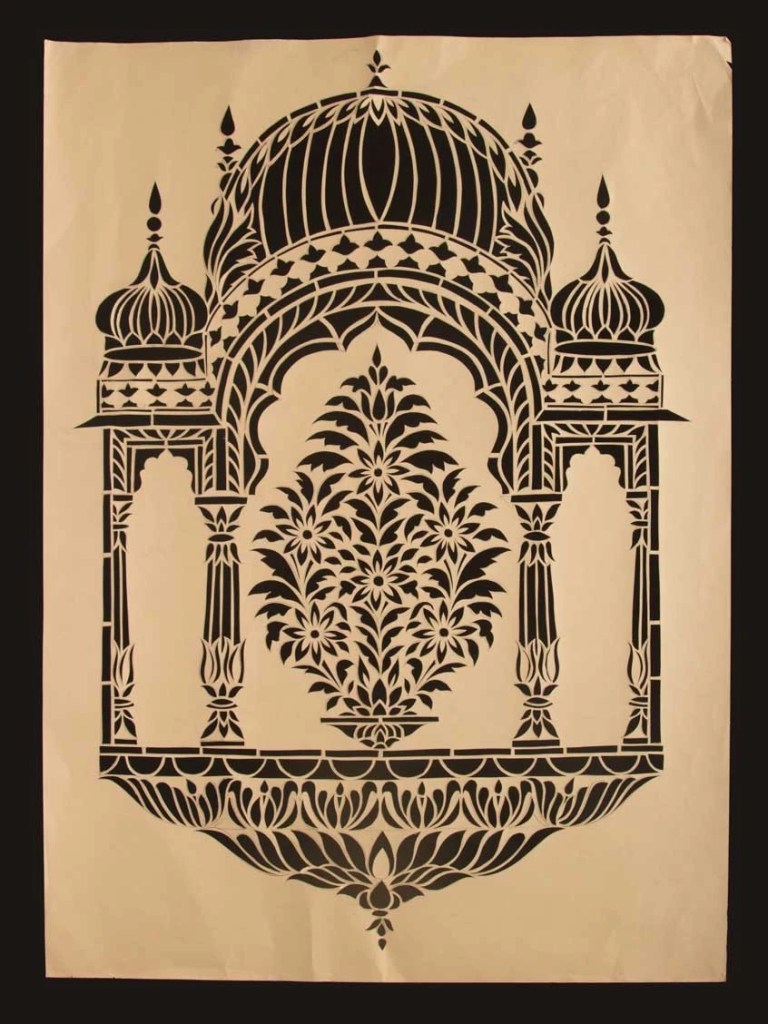

Where: Temples of Braj region
Medium: Paper stencils, colored powders
Why it matters:
Sanjhi is ephemeral—the rangoli’s metaphysical cousin. Practiced by Vaishnavite priests, Sanjhi involves creating intricate stencils of Krishna-lila and laying them with colored powder on temple floors. It’s devotional geometry.
The art disappears after a day, reminding us—like all good philosophy—that beauty is transient, but symmetry is eternal.
In these neglected canvases of rural India lies a civilizational whisper—resilient, rhythmic, and richly political. They are not “naïve” or “folk” in the pejorative sense, but living testaments to alternative ways of seeing and recording truth.
So the next time you pick up a Madhubani coaster or Warli notebook, pause. Somewhere in Jharkhand or Goa, someone is still painting—not for Etsy, but for eternity.
 ARTMO MAG
Leave a comment