
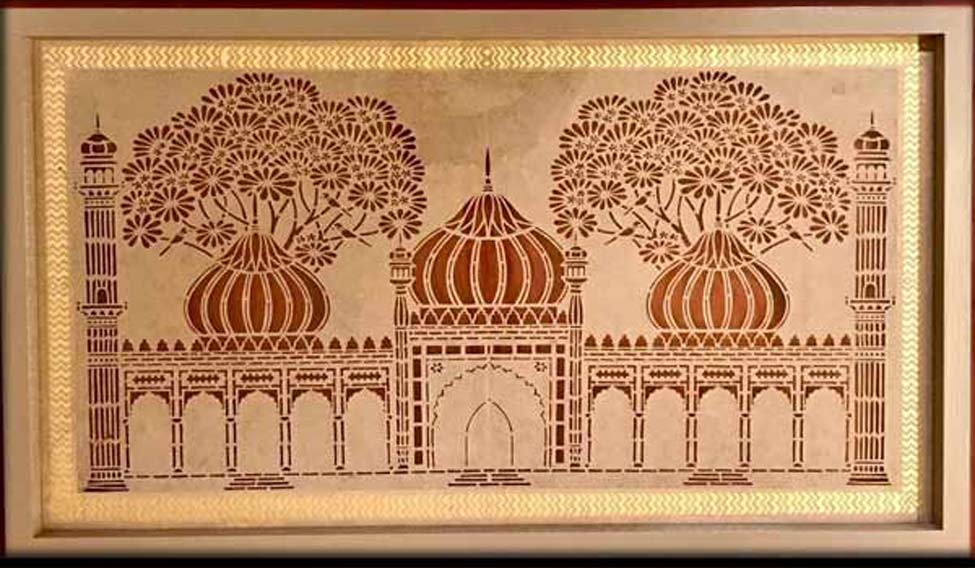
In the bustling town of Mathura, known for its deep connections to Hindu mythology, a nearly forgotten art form is being revitalized after centuries of decline. Sanjhi, an intricate paper-cutting craft rooted in the worship of Lord Krishna, is experiencing a quiet resurgence as artisans and cultural enthusiasts work to preserve this ancient tradition. Once a central part of religious rituals and temple decorations, Sanjhi had all but vanished from contemporary practice. Today, however, efforts are underway to restore its place in Indian art and culture.
Sanjhi is a traditional Indian art form that involves the creation of detailed stencils from paper. These stencils are then used to create elaborate designs on the floors or walls, typically in temples and homes. The art is most closely associated with the worship of Lord Krishna, particularly in the Braj region, which encompasses Mathura and Vrindavan—places of significant religious importance in Hinduism.
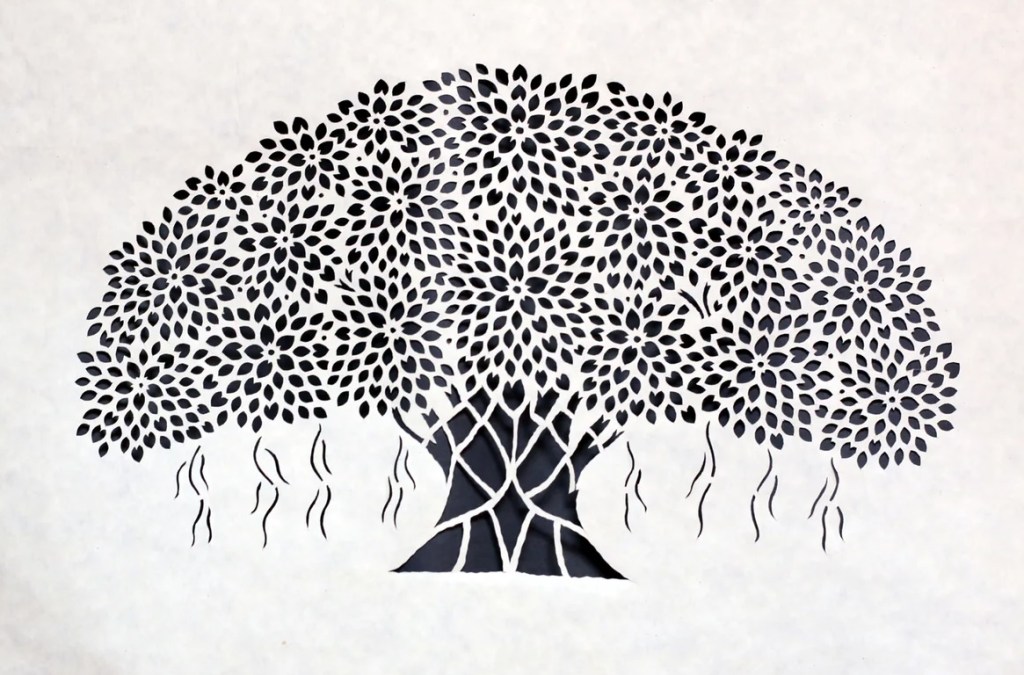
The process of creating Sanjhi is both painstaking and meditative. Artisans begin by folding thin sheets of paper and carefully cutting them with small, precise tools to form symmetrical patterns. The designs often depict scenes from the life of Krishna, including his playful activities as a child, his dances with the Gopis (milkmaids), and his other divine acts. Once the stencil is complete, it is placed on a surface, and colored powders are sprinkled over it, leaving behind a delicate and intricate image when the stencil is removed.
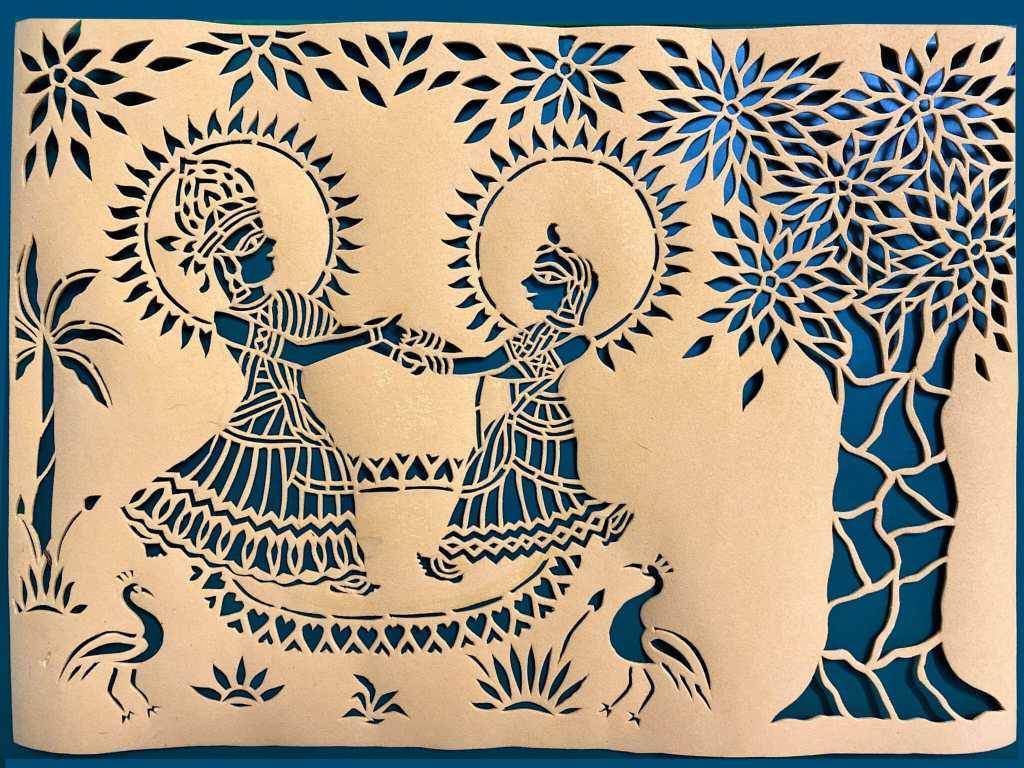
Historically, Sanjhi was an integral part of daily worship and festivals in the Braj region. During the autumn festival of Navaratri, for instance, devotees would create Sanjhi designs in their homes and temples as a form of offering to Krishna. The art was not only an expression of devotion but also a communal activity that brought people together, fostering a shared sense of spirituality and cultural identity.
However, as India moved into the modern era, the practice of Sanjhi began to wane. The decline was gradual but steady, driven by several factors. Urbanization and the shift towards more commercial forms of worship reduced the role of traditional crafts in religious practices. The introduction of mass-produced religious items further marginalized handmade art forms like Sanjhi. By the mid-20th century, only a few families in Mathura continued to practice the craft, and even among them, the tradition was at risk of being lost.
The revival of Sanjhi began in the late 20th century, spurred by a growing awareness of the need to preserve India’s intangible cultural heritage. Cultural organizations, along with a few dedicated artisans, took on the challenge of bringing Sanjhi back into the public eye. Workshops and exhibitions were organized to introduce the art form to new audiences, both within India and internationally. These efforts were crucial in rekindling interest in Sanjhi and attracting a new generation of artists and patrons.
One of the pivotal figures in the revival of Sanjhi is Ram Soni, a master artisan from Mathura who has spent decades perfecting the craft. Soni, who learned the art from his father, has been instrumental in teaching Sanjhi to young artists and promoting it through various cultural platforms. His work has been showcased in exhibitions across India and abroad, helping to elevate Sanjhi from a nearly extinct practice to a recognized form of traditional Indian art.
Despite these efforts, the future of Sanjhi remains uncertain. The craft is still practiced by a relatively small number of artisans, many of whom struggle to make a living from their work. The intricate and time-consuming nature of Sanjhi makes it difficult to compete with faster, less labor-intensive art forms. Additionally, the market for traditional crafts is limited, with demand often fluctuating based on trends and economic conditions.
To address these challenges, there has been a push to innovate within the tradition of Sanjhi. Artisans are experimenting with new materials and applications, such as using Sanjhi stencils on fabric or incorporating the designs into modern home decor. These innovations aim to make Sanjhi more accessible to contemporary consumers while preserving the essence of the craft. Cultural organizations are also working to integrate Sanjhi into educational programs, hoping to inspire a deeper appreciation for the art form among younger generations.
The revival of Sanjhi is part of a broader movement to safeguard India’s diverse cultural heritage in the face of globalization and modernization. While the craft remains niche, the efforts to preserve it highlight the importance of maintaining traditional practices in a rapidly changing world. The continued survival of this art form will depend on the ability of artisans, cultural institutions, and society at large to adapt and find new ways to keep such traditions alive.
 ARTMO MAG
Leave a comment