
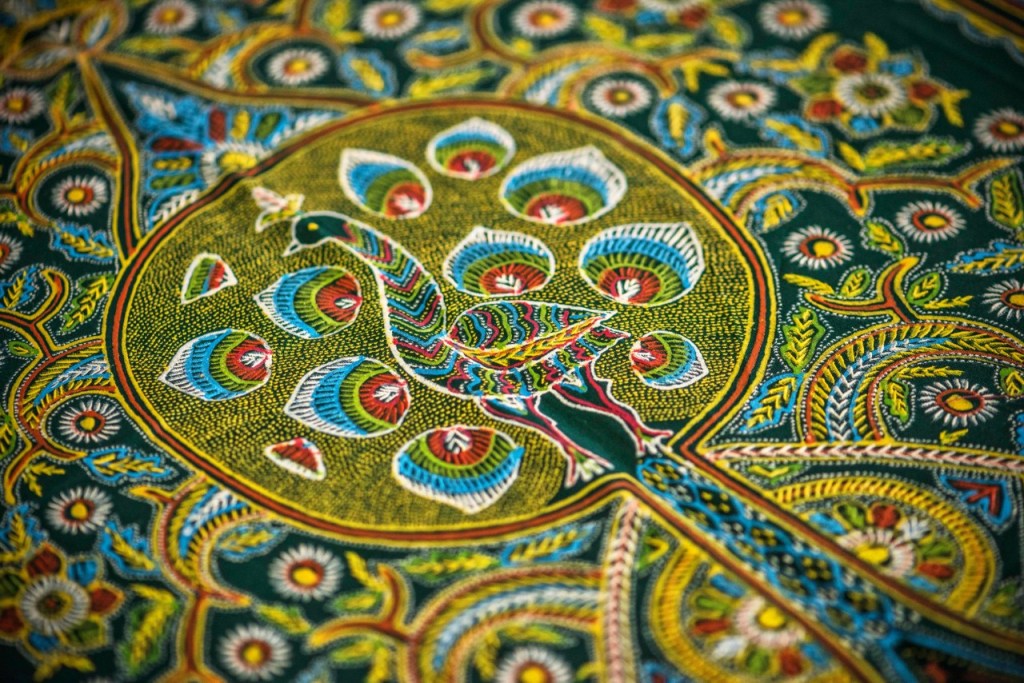
In the remote village of Nirona, nestled in Gujarat’s Kutch region, an ancient art form is quietly being revived after nearly fading into obscurity. Rogan art, a textile painting technique with over 400 years of history, was once a prominent craft in the region. Today, it is practiced by only a few artisans who are working tirelessly to preserve this cultural legacy.
Rogan art is unique in its method and materials. The process begins with castor oil, a common crop in Kutch, which is heated and mixed with natural pigments to create a thick, colorful paste. This paste is then meticulously applied to fabric using a metal stylus. The designs, often intricate and symmetrical, are drawn freehand by the artisans without any prior sketching. The patterns typically feature floral and geometric motifs, reflecting both the natural environment and the cultural heritage of the region.
For centuries, Rogan art was a thriving tradition in Kutch. The textiles adorned the homes and garments of local communities, valued for their vibrant colors and detailed designs. However, with the advent of industrialization and the rise of machine-made textiles, the demand for handcrafted items like Rogan art sharply declined. By the late 20th century, the art form had all but disappeared, with only a few families in Nirona continuing to practice it.
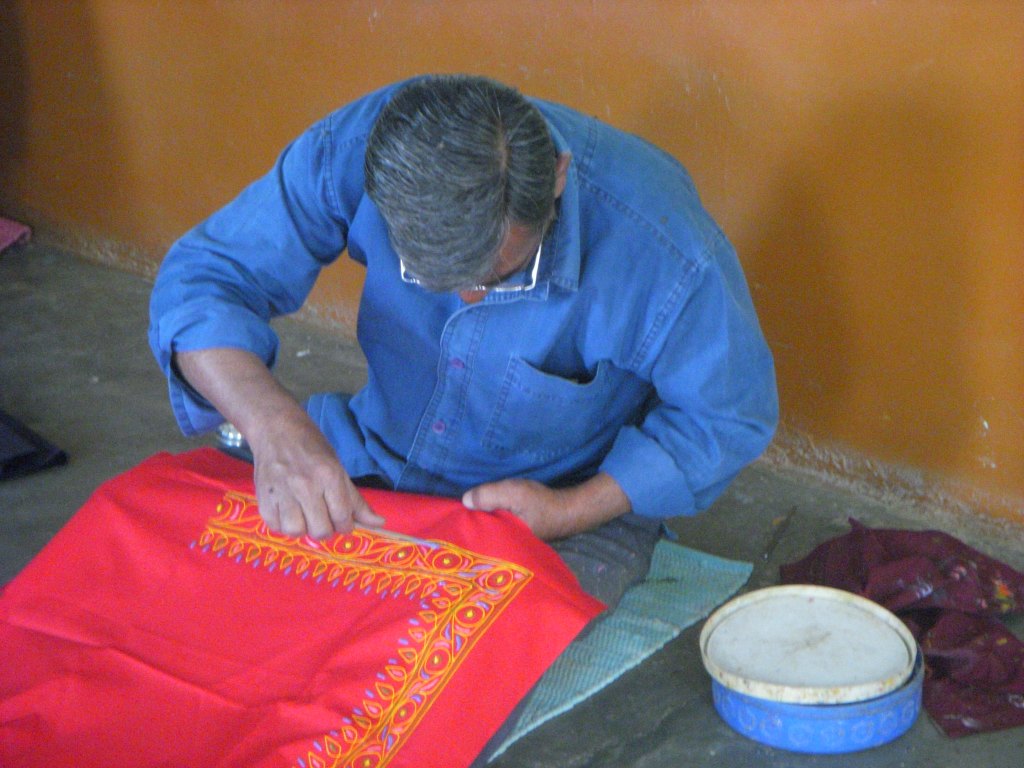
Among those who remained committed to Rogan art was the Khatri family, one of the last custodians of this ancient craft. As the market for traditional textiles dwindled, the Khatri family faced the reality that their art might soon be lost. Yet, rather than abandon their heritage, they sought new ways to sustain it. They began participating in craft fairs across India, where the uniqueness of Rogan art started to attract attention.
The revival of Rogan art gained significant momentum in 2014 when the Khatri family presented a Rogan piece to India’s Prime Minister, Narendra Modi. The Prime Minister, in turn, gifted the piece to U.S. President Barack Obama during his visit to India. This gesture brought international recognition to Rogan art, sparking renewed interest and appreciation for the craft.
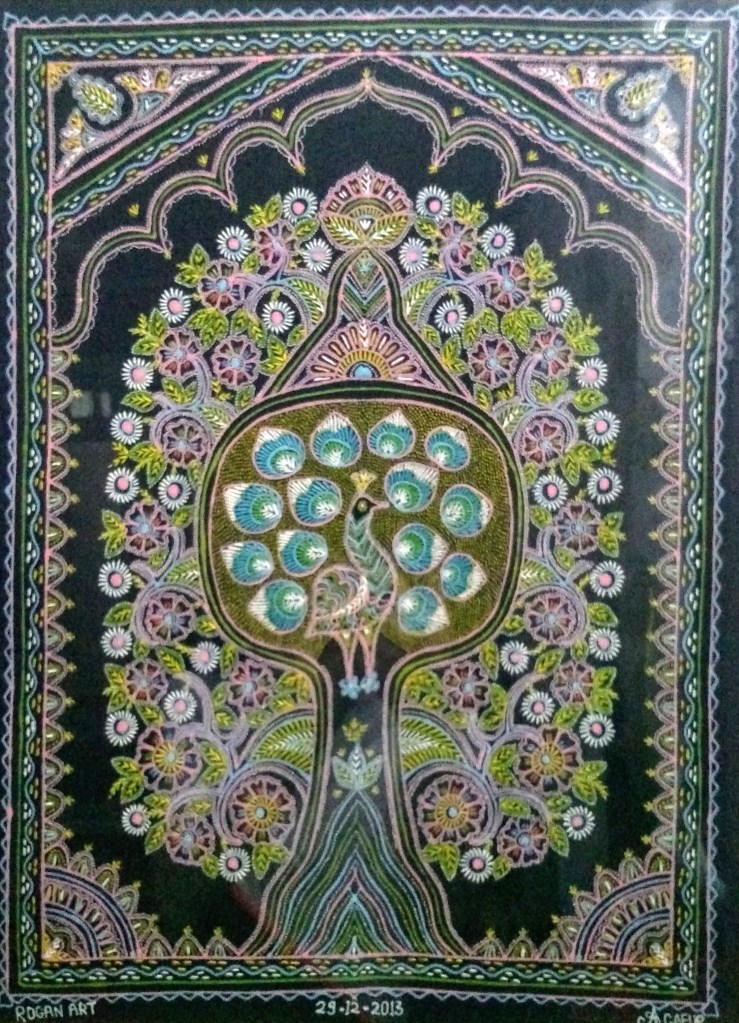
Despite this newfound visibility, Rogan art remains a highly specialized skill, practiced by only a small group of artisans. The Khatri family, aware of the fragility of their craft, has taken steps to ensure its survival. They have begun teaching younger generations, both within their family and in the wider community, to pass on the skills and knowledge that have been preserved for centuries. Through workshops and educational initiatives, they aim to secure the future of Rogan art, ensuring that it remains a living tradition.
Citation: Tiwari, Dr. (2023). "The Remaining Essence of Rogan Art: In context of Innovative Business Practices of craft Heritage".
 ARTMO MAG
Leave a comment