
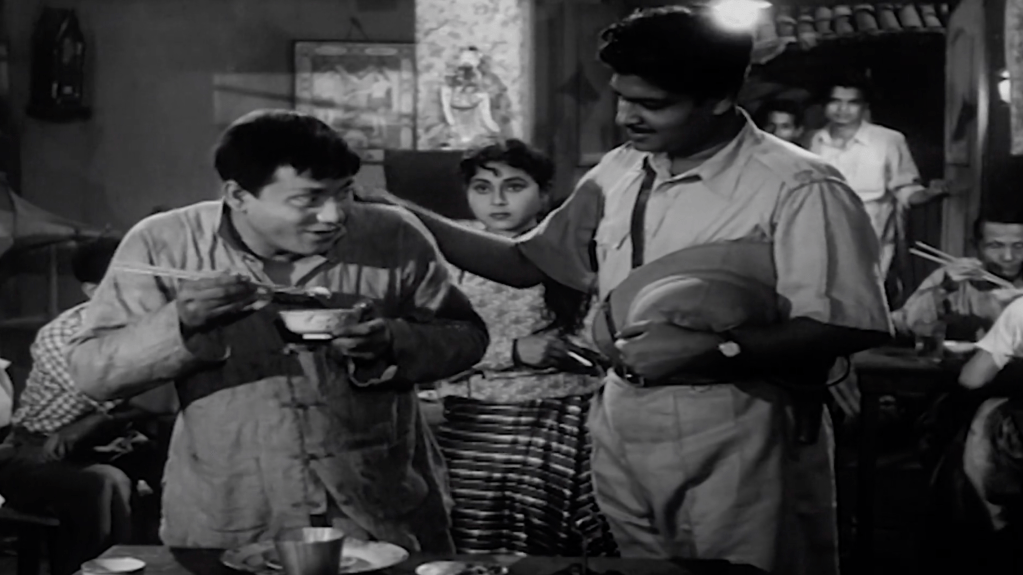
There are films that feel like distant memories from a different time, and then there are those that linger, unshakeable, in the mind, long after watching it. Neel Akasher Niche—literally translating to “Under the Blue Sky”—directed by Mrinal Sen, is one such film. I remember the first time I encountered it. I was struck, not by the grandeur of its scale, nor by the intensity of its plot, but by its quiet resilience. It felt like I was stepping into a dream—a dream laced with historical urgency and personal longing. And yet, beneath that dream-like surface was an unflinching narrative of colonial subjugation, resistance, and the intimate bond that sometimes blossoms between strangers in the most unexpected ways.
Set against the backdrop of the 1930s in Calcutta, the film tells the story of Wang Lu, a Chinese migrant working as a street hawker, selling silk and small trinkets, and his unlikely friendship with Basanti, a Bengali woman. It is a story that, at its heart, examines the human cost of imperialism, the silent devastations wrought by colonial policies, and the bonds of solidarity that emerge between the marginalized.
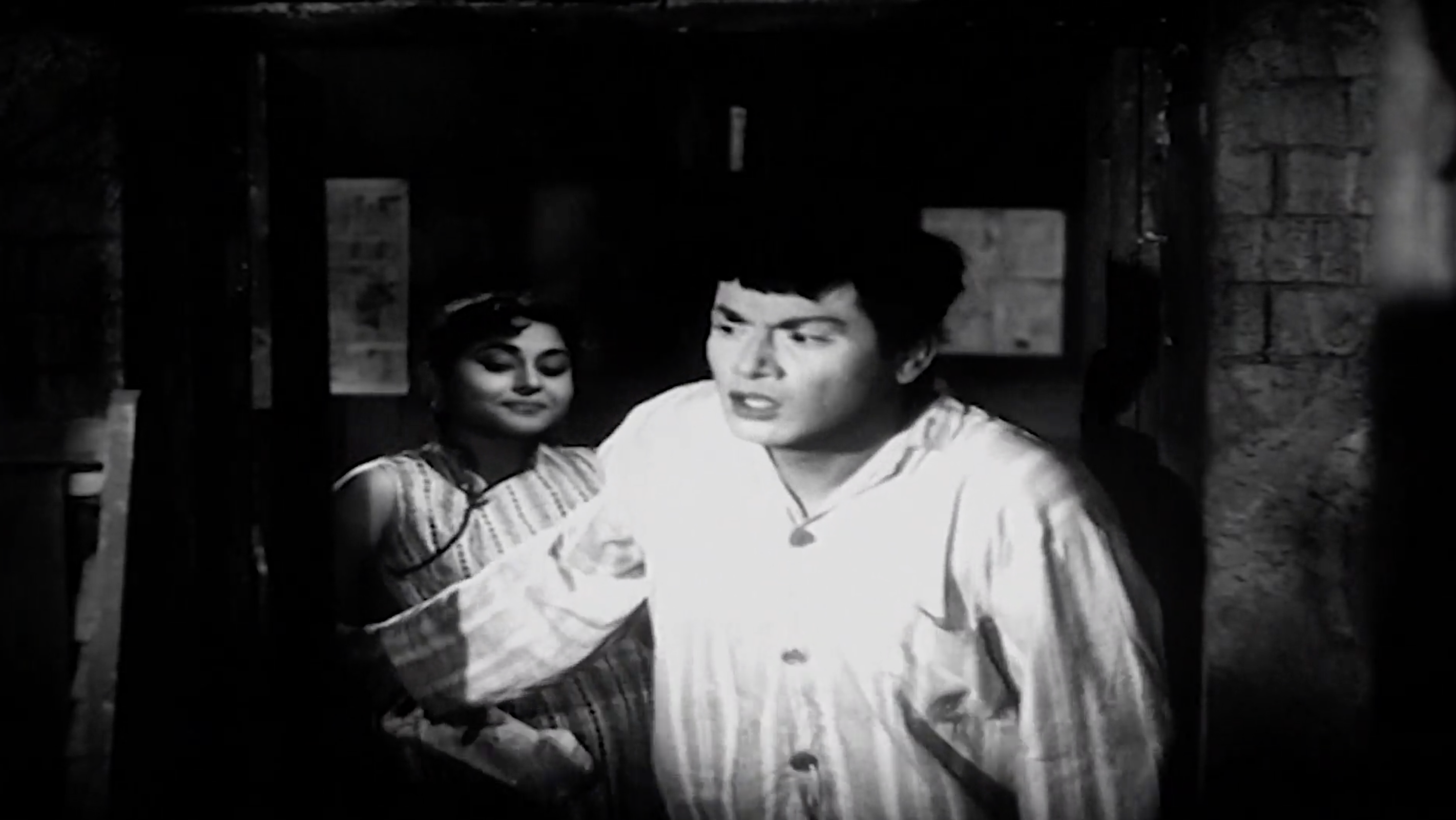
Interestingly, this politically charged narrative didn’t go unnoticed by the authorities. ‘Neel Akasher Niche’ became the first film to be banned by the Government of India in 1959, likely due to its bold portrayal of colonial oppression and subtle criticism of the establishment.
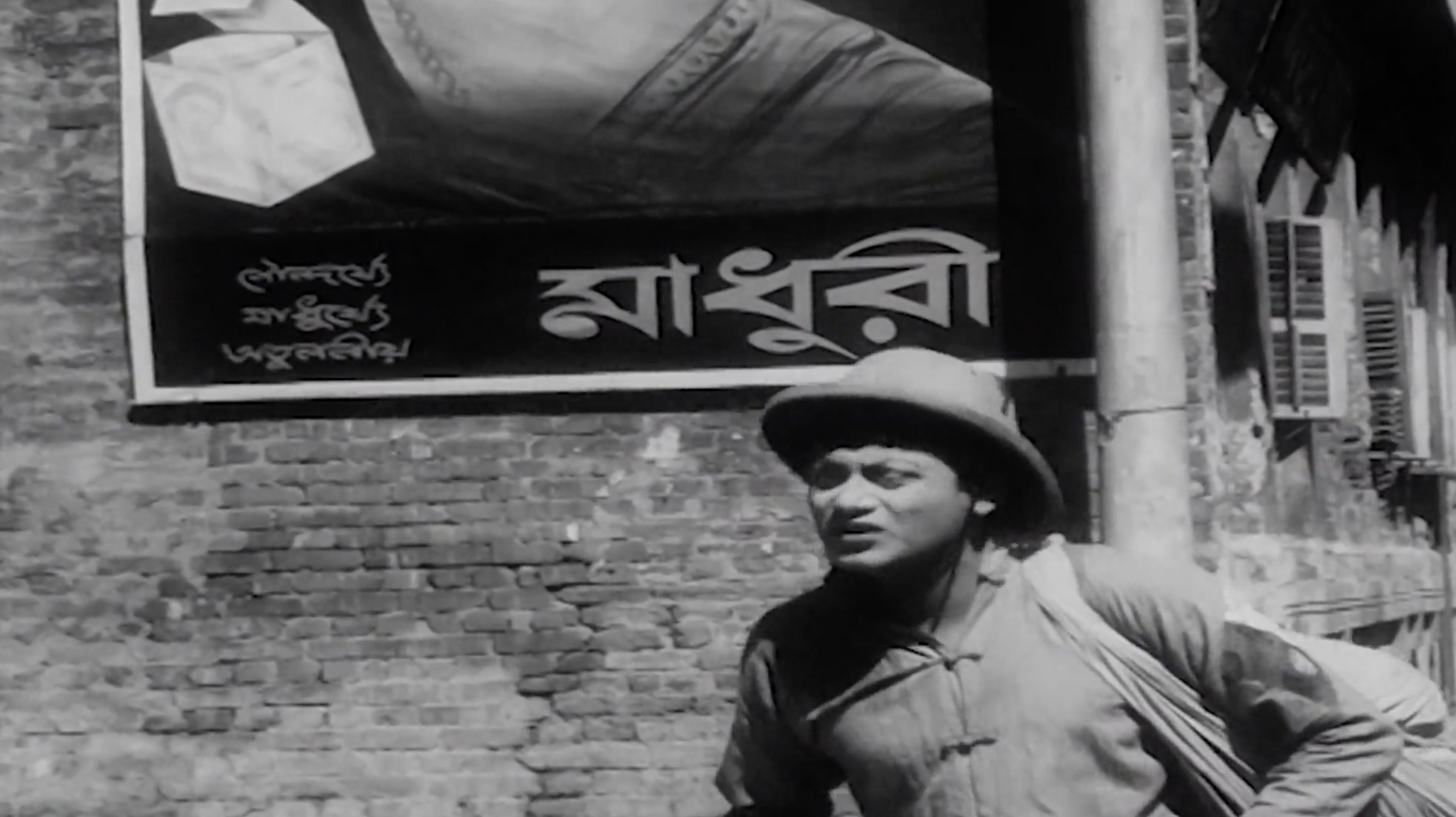
The film opens with the sight of Calcutta’s streets, teeming with life, and yet shrouded in a sense of quiet suffocation. The colonial presence is not overt, but it is there—lurking in the margins, in the faces of the people, in the unspoken rules that govern their interactions. Mrinal Sen has always had a knack for presenting political realities without turning his films into didactic exercises. And here, too, he refrains from heavy-handedness. The politics of Neel Akasher Niche seeps through the cracks, through Wang Lu’s quiet observations, through Basanti’s simmering discontent, and through the deep silences that punctuate the film. These silences, I realized, are not empty—they are pregnant with meaning, with the weight of histories unspoken, of struggles internalized.
The dynamic between Wang Lu and Basanti is one of the most intriguing aspects of the film. On the surface, it seems almost too simple—two individuals from vastly different worlds coming together in a moment of shared humanity. And yet, it is so much more than that. Sen’s brilliance lies in his ability to evoke the nuances of their relationship without resorting to sentimental clichés. There is no overt romance here, no grand declarations of love or loyalty. Instead, there is a quiet understanding, a recognition of each other’s suffering, a solidarity that transcends language, culture, and even the visible forms of resistance.
What fascinated me the most, however, is how Sen uses the very landscape of the film to reflect the inner lives of his characters. Calcutta, under the British Raj, becomes more than just a setting—it becomes a character in its own right. The streets, the bustling markets, the colonial architecture—all of it is rendered with such attention to detail that you can almost feel the oppressive weight of the colonial gaze. And yet, Sen doesn’t allow the city to become merely a backdrop for Wang Lu’s story. Instead, it becomes a living, breathing organism—one that mirrors the tensions and contradictions of the characters who inhabit it.
It frequent visual impact of the sky is the ultimate paradox—beneath the infinite sky, their lives are confined by invisible walls of oppression. The cinematography, with its use of wide-angle shots and lingering close-ups, reinforces this sense of entrapment. The characters are often framed within doorways, windows, or in confined spaces, as if the very world they inhabit is conspiring to keep them trapped.
There’s a scene that lingers with me to this day—Wang Lu, sitting by the Ganges, his eyes fixed on the horizon. There is a profound stillness in the scene, a sense of quiet yearning. The river, ever-flowing, becomes a metaphor for the passage of time, for the continuity of life under the shadow of colonialism. And yet, in that moment, it also becomes a symbol of hope. Wang Lu is a man displaced, an outsider in a foreign land, and yet, in this moment, the river seems to offer him a fleeting sense of belonging, a reminder that there is something eternal, something that transcends the man-made borders that seek to confine him.

Sen’s direction here is masterful—not just in terms of the visual composition but in the way he allows his actors to inhabit their roles fully. Wang Lu, played by the legendary Kali Banerjee, is a man of few words, and yet, Banerjee’s performance is rich with emotion. Every glance, every pause is loaded with meaning. Similarly, Basanti, played by the graceful Kanu Bannerjee, is a character of quiet strength. Her rebellion is not the loud, heroic kind, but one that simmers beneath the surface, revealed in the smallest of gestures. The chemistry between these two actors is electric, not in the conventional romantic sense, but in the way they convey a shared sense of pain and resilience.
But perhaps what moved me the most about Neel Akasher Niche is its refusal to offer easy answers. The film ends not with a grand resolution, but with a sense of ambiguity. Wang Lu leaves, but the questions remain. What is freedom, in a world where borders—both literal and figurative—define our lives? How do we resist, not just the physical occupation of our lands, but the colonization of our minds, our identities? These are the questions that Sen leaves us with, and they are as relevant today as they were when the film was first made.
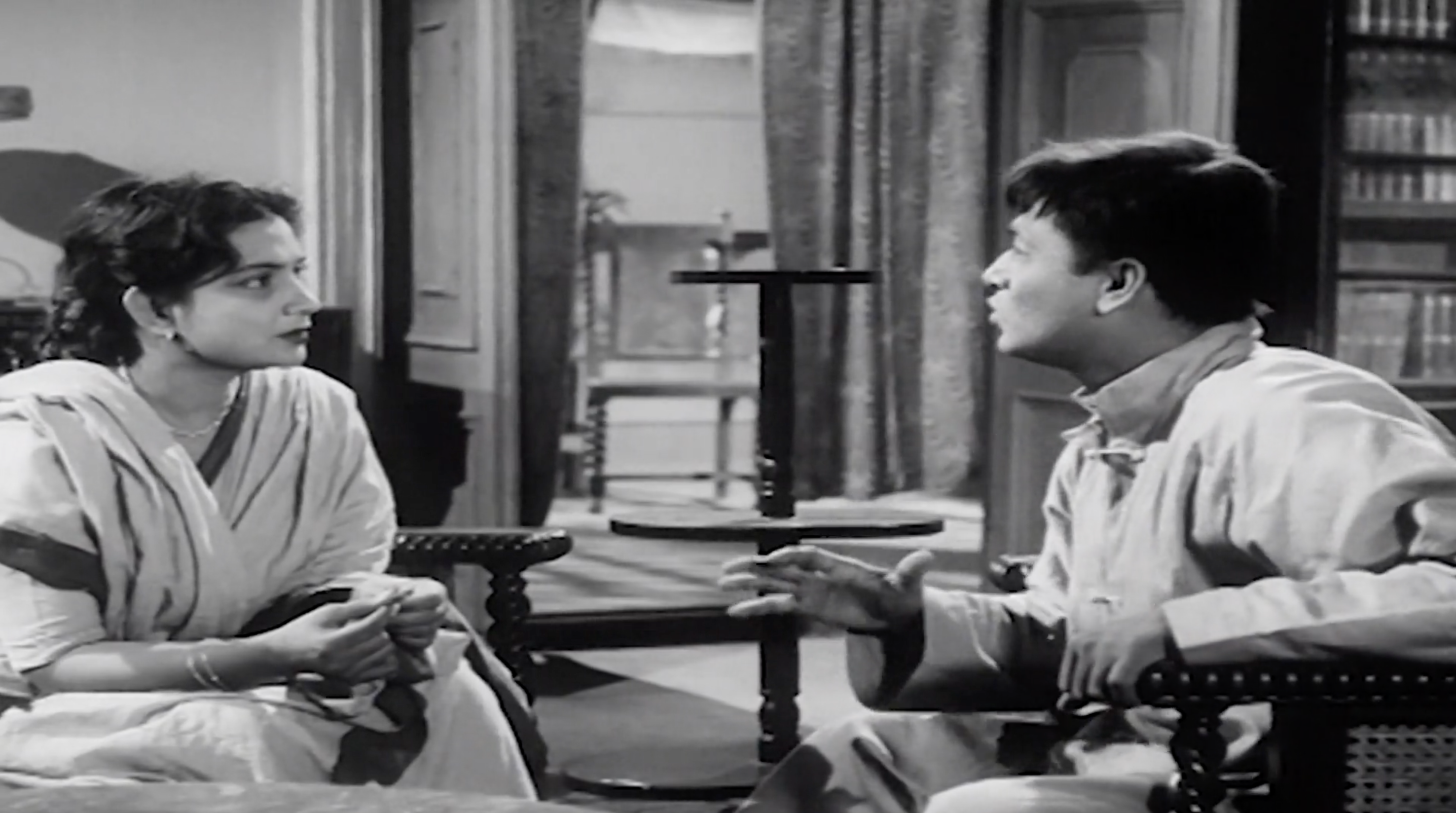
I found myself thinking about Wang Lu and Basanti long after the film ended. Their relationship, in many ways, felt like a metaphor for the larger struggle against colonialism—a struggle that is not just political, but deeply personal. Wang Lu’s foreignness, his status as an outsider, becomes a mirror for Basanti’s own feelings of alienation within her own country, under the rule of a foreign power. And yet, there is also a profound sense of hope in their connection—a reminder that even in the darkest of times, there is the possibility of solidarity, of shared humanity.
In terms of its cinematic techniques, Neel Akasher Niche stands as a testament to Mrinal Sen’s ability to blend the political with the poetic. His use of lighting, composition, and sound is never arbitrary—it is always in service of the story, always working to enhance the emotional and thematic depth of the film. The sound design, in particular, struck me as incredibly nuanced. The city’s ambient noise—the clatter of trams, the chatter of the marketplace, the distant sounds of colonial military parades—creates an aural landscape that is as much a part of the narrative as the visuals.
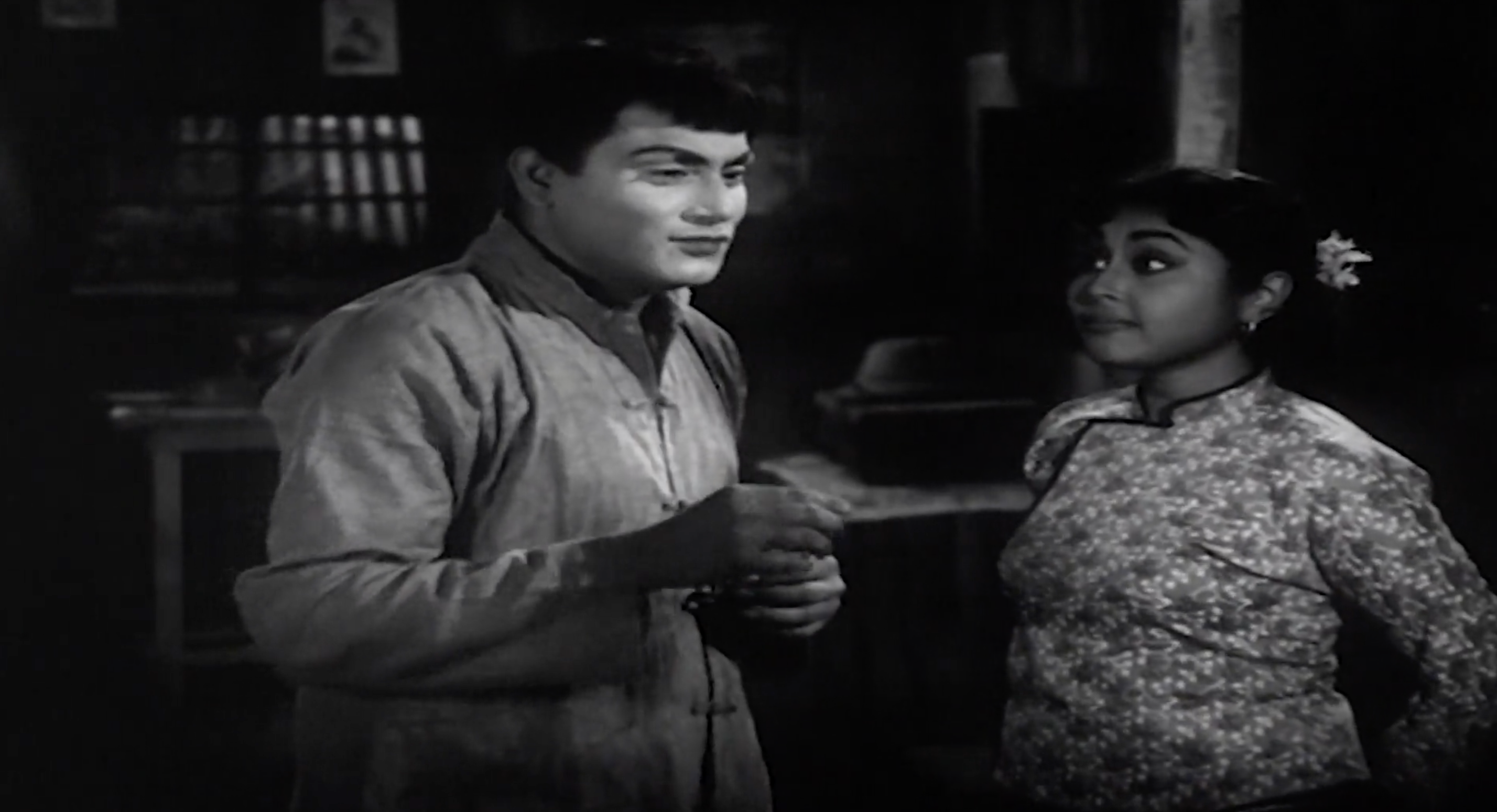
What remains, in the end, is a feeling—an almost indescribable sense of longing, of yearning for something just out of reach. Neel Akasher Niche is not a film that provides comfort or closure. It is a film that unsettles, that forces us to confront the uncomfortable truths of history and the ways in which those histories continue to shape our present. And yet, it is also a film of quiet beauty, of moments that remind us that even under the bluest of skies, there is always the possibility of hope.
In Neel Akasher Niche, Mrinal Sen creates a world that feels at once intimately familiar and profoundly distant—a world where politics and poetry collide, where the personal and the political are inextricably intertwined. It is a film that lingers, that haunts, and ultimately, that transforms the way we see the world.
This film can be streamed on Hoichoi.
 ARTMO MAG
Leave a comment